

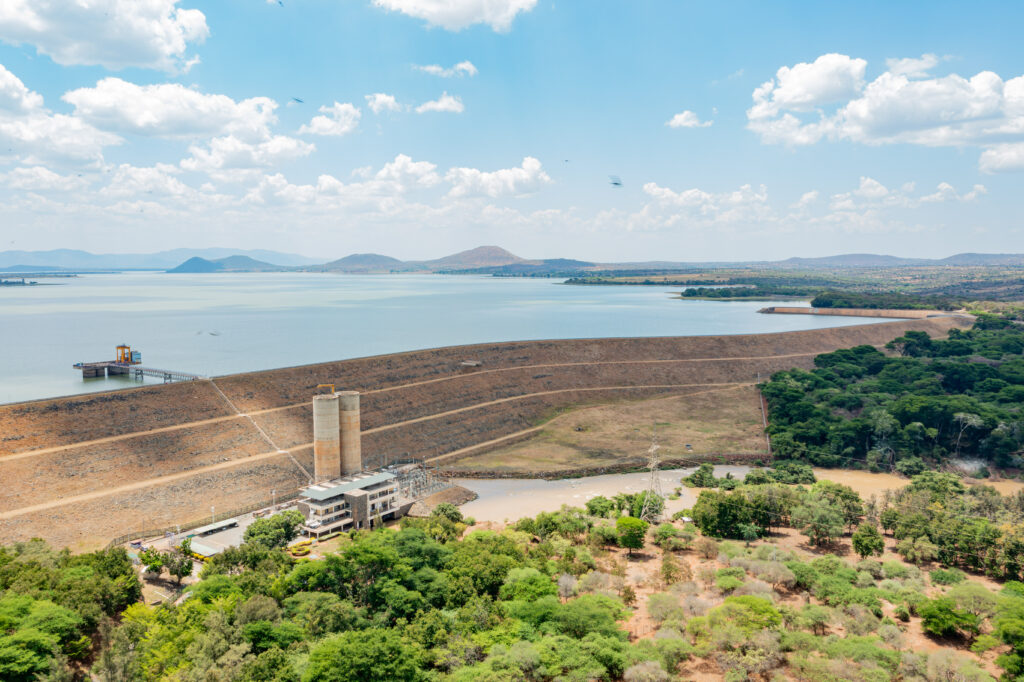
Kenyan households and businesses could benefit from lower power costs after Kenya Electricity Generating Company PLC (KenGen) reported strong water levels across its Seven Forks Dams and other hydro power stations across the country, lifting hydropower generation.
According to KenGen’s April 2026 dispatch reports, the company’s main hydros produced 11.7 million kilowatt-hours on April 28, above a projection of 10.95 million kilowatt-hours, with the Eastern Block generating the bulk of it at about 9.13 million kilowatt-hours against a projection of 8.05 million kilowatt-hours.
The company’s latest reservoir readings point to a hydro system operating at or near optimal levels. On April 28, Masinga stood at 1,056.54 meters, Kamburu at 1,006.07 meters, Gitaru at 923.69 meters, and Kindaruma at 780.28 meters, all above their minimum operating levels.
“Strong reservoir levels averaging about 99% of operating capacity position us to continue maximising hydropower generation, the cheapest sources of electricity on Kenya’s grid. This gives the country greater flexibility to expand renewable supply while reducing reliance on more expensive thermal generation,” said KenGen Ag. Managing Director and CEO, Ahmed Issack.
Importance of maintaining strong hydro output
KenGen reiterated that maintaining strong hydro output helps moderate overall power costs, protect consumers and industry from price shocks, and reinforce grid stability.
At the same time, KenGen sought to calm concern among communities living downstream of the Seven Forks cascade, saying high dam levels do not mean unmanaged flooding risk.
KenGen assured Kenyans that its engineers run a robust water management program designed to keep reservoirs within safe operating ranges, and that even when Masinga nears maximum levels, the company does not expect uncontrolled spilling so long as inflows remain manageable.
The April dispatch data supports that message of control rather than alarm. The daily reports repeatedly described the key hydro units as healthy, showed no broad pattern of emergency generation being required, and reflected steady performance across the cascade, culminating in one of the month’s strongest hydro output days on April 28.
“The combination of healthy reservoir levels, prudent water management and reliable hydropower generation enables us to sustain affordable, clean electricity for homes and businesses, while protecting downstream communities. Responsible water stewardship remains at the heart of both energy security and public safety,” said Issack.