

By Emmanuel Masinde
The United Kingdom has for the last six years been supporting disability inclusion programs in Kenya.
Dubbed Disability Inclusive Development – Inclusive Futures (DIDIF), the UK’s £30m flagship programme is being implemented by Sightsavers across 6 countries including Kenya.
There are two projects under this program – one is inclusive early childhood development education (ECDE) and the other one is inclusive livelihood project (InBusiness).
Under the £1.1 million inclusive ECDE program – it works through government structures and with civil society to identify affordable, contextually appropriate, scalable and sustainable inclusive early childhood development education approaches for children with disabilities in selected pre-primary schools in Homa Bay and Kakuma refugee camp.
Among the beneficiaries of the initiative is Nataparin, a single mother of three who travelled from her home in remote Turkana to Kakuma in search of medical care for her eldest son.
While there, she learned about an Inclusive Futures project, which provides support to children with disabilities to access inclusive education.
Her son was given a wheelchair and Nataparin now pushes him eight kilometres every day to and from school.
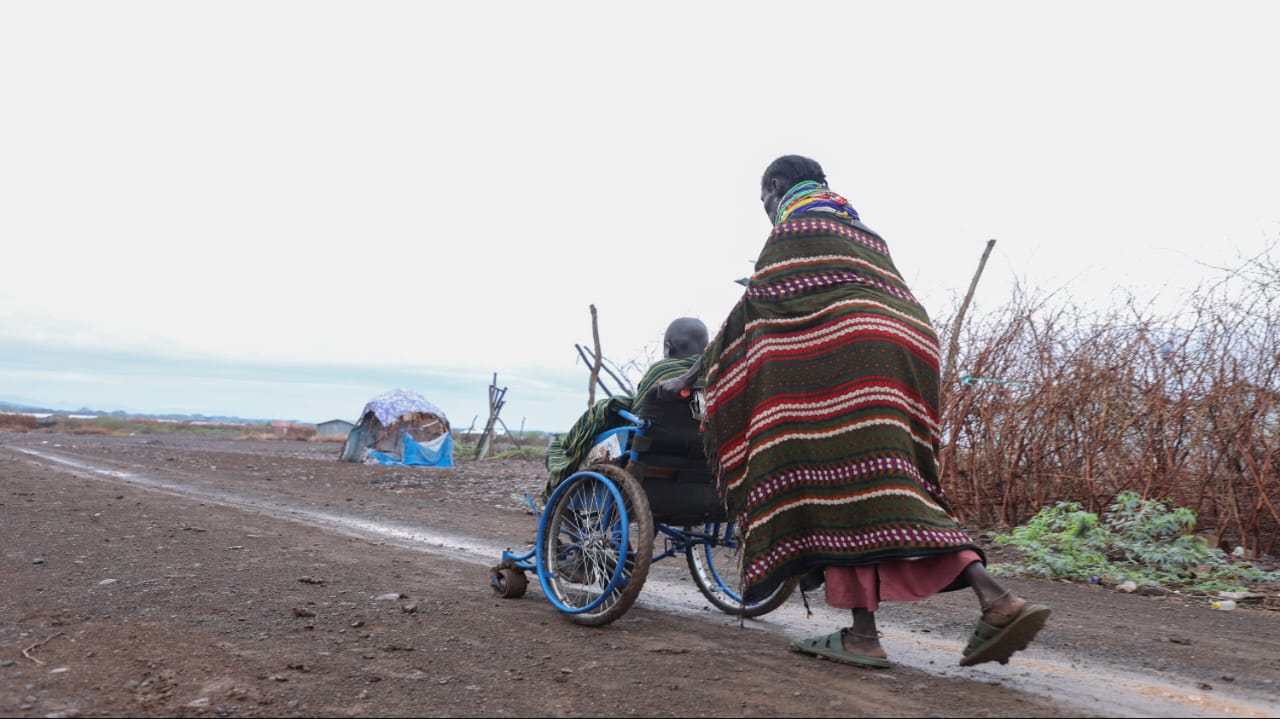
“I have that passion to take him to school regardless of the challenges,” she said.
Nataparin is the epitome of resilience and hope. She hopes her other two children will be able to attend school as well.
Inclusive livelihoods project: InBusiness
Through our conversation, she also narrates how she felt empowered seeing other women in Kakuma earning a living and how she was looking for ways to start her own business to sustain her family.
Another UKaid funded initiative is the Inclusive livelihoods project: InBusiness with a Total budget £2.5m.
This project aims to help more than 3,000 micro-entrepreneurs with disabilities to grow, develop or sustain their businesses.
Mary Melesa, South Sudanese micro entrepreneur living in Kakuma refugee camp in Kenya is among the beneficiaries.
Mary is a physically challenged refugee from South Sudan and has 8 children who she stays with.
She came into the camp in 2017.
“Before, I didn’t know much about financial management or record keeping. Now I’ve been given a partial grant, which I’ve used to add stock to my shop, and I’ve been able to support my family,” Mary narrates.
 Get factual and reliable news as fast as they happen