

Annual consumer price inflation as measured by the Consumer Price Index (CPI) was 4.4 per cent in March 2026. This implies that the general price level was 4.4 per cent higher in March 2026 than it was in March 2025.
The price increase was primarily driven by a rise in prices of items in the Food and Non-Alcoholic Beverages (7.7%); Transport (3.8 %), and Housing, Water, Electricity, Gas and other fuels (2.0%) over the one year.
These three divisions together account for over 57 per cent of the total weight across the 13 major expenditure categories.
The overall index increased from 149.20 in February 2026 to 150.00 in March 2026, resulting in a monthly inflation rate of 0.5 per cent. The year-on-year inflation stood at 4.4 per cent in March 2026.
What were the prices of food items in March 2026?
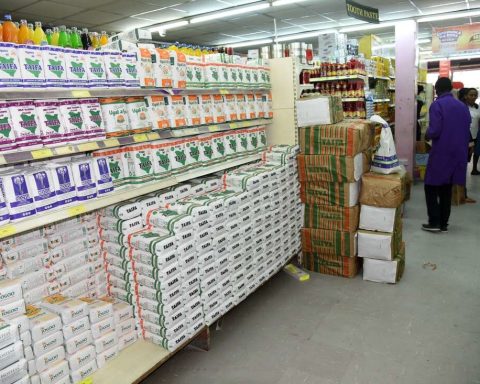
Monthly inflation of items under the Food and Non-Alcoholic Beverages division between February 2026 and March 2026 was 1.1 per cent.
Prices of sugar, maize grain, loose and cabbage went down by 1.3, 2.4 and 3.8 per cent, respectively. In the same period, prices of tomatoes and beef with bones rose by 13.3 per cent and 1.8 per cent respectively.
In addition, prices of transport-related items showed mixed trends. The price of diesel and petrol remained the same in the review period, while prices of gas/LPG decreased by 0.1 per cent.
The price of rent for a single room remained unchanged.
Between February 2026 and March 2026, beer (lagers and stouts) recorded a slight price rise of 0.3 per cent. In contrast, miraa (khat) prices experienced a decrease of 1.2 per cent while boys’ trousers/shorts and men’s shirts recorded slight price declines of 0.2 per cent and 0.1 per cent, respectively.
In contrast, prices for boys’ leather shoes and girls’ school uniforms increased by 0.3 per cent and 0.4 per cent, respectively.
Shoe polish/cream recorded the highest rise at 0.7 per cent, indicating a relatively stronger upward movement compared to other items. Both laundry soap/bar soap and detergents experienced moderate increases of 0.3 per cent each.
The Health division recorded an inflation rate of 0.3 per cent. General practitioners’ services recorded a marginal rise of 0.1 per cent. In addition, cancer medicine experienced a sharp increase of 2.8 per cent.
Prices of tablets and TVs in Kenya in March 2026
Between February and March 2026, prices for information and communication equipment showed mixed trends. The price of computers (tablets) declined significantly by 2.5 per cent, indicating reduced costs in this category.
In contrast, prices for televisions and mobile handsets (both basic and smartphones) increased modestly by 0.3 per cent and 0.4 per cent, respectively.
In the education services sector, certificate course fees recorded went down slightly while postgraduate fees rose by 0.1 per cent. Overall, the division recorded a monthly inflation of 0.4 per cent between February and March 2026.
Prices within the hotel and restaurant category showed minimal changes. Hotel and restaurant cakes and snacks recorded a slight decline of 0.1 per cent, indicating a small reduction in prices. Meanwhile, both café and take-away prepared food, as well as hotel and restaurant prepared foods, registered marginal increases of 0.1 per cent each.
Medical insurance and motor vehicle insurance remained the same between February 2026 and March 2026.
Between February and March 2026, prices for personal care and household hygiene items increased across all listed products. Toilet paper/tissue paper recorded the highest rise at 1.4 per cent, indicating notable upward pressure in essential household supplies. Body lotion prices increased by 0.4 per cent, while hair dressing services saw a modest rise of 0.1 per cent.