

The World Food Programme (WFP) has launched the second phase of the Lisha Jamii initiative under which it will provide cash transfers and food assistance to almost a million drought-affected people in 10 arid and semi-arid (ASAL) counties until October 2023.
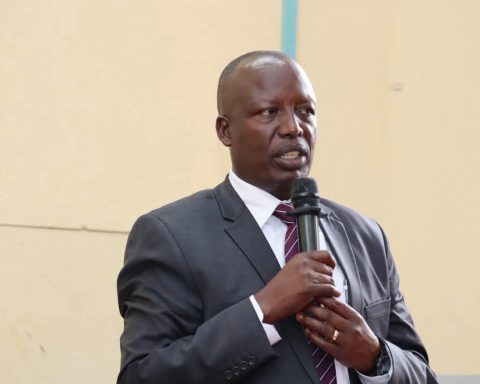
The launch was presided by United States Ambassador to Kenya Meg Whitman at the WFP warehouse in Athi River. Also present was National Drought Management Authority (NDMA) Chief Executive Officer Lt Col (Rtd) Hared Hassan.
Speaking during the event, WFP Kenya Representative and Country Director Lauren Landis thanked the US Government and the American people for their generous support.
“The generosity of the American people has enabled WFP to support the most vulnerable Kenyans through three years of drought and helped to prevent more people from falling into hunger and malnutrition, especially women and children,” Landis said.
With USAID support, about 943,000 people will receive 75% of the recommended food basket for another six months, the Country Director added. Landis noted that though most parts of the country had received good rains, food security in ASALs was still very dire.
“As you all know, recovery takes time and about 4.4 million people especially in Turkana, Wajir, Marsabit, Garissa and Mandera desperately need food assistance,” she said.
The US Ambassador noted that they were proud to be associated with the work WFP is doing and efforts by Kenyan Government to mitigate drought impacts.
Stop-gap measure
NDMA CEO Lt Col (Rtd) Hared Hassan said despite the recovery brought about by the rains, ASAL counties are yet to realise any significant improvement in terms of food security.
“This is due to the usual time lag between the onset of rains and food availability at the household level. For instance, while pasture regeneration is still on course, the majority of farmers have not started harvesting crops,” he said.
He further thanked development partners and the UN Family for heeding the Government’s call for support, singling out the United States Government, which he said had stood steadfast with Kenya during her time of need.
The CEO also called on stakeholders to prioritise drought recovery interventions alongside humanitarian support.
“The humanitarian assistance we provide is only a stop-gap measure. We must not lose sight of long-term measures that will build resilience,” Lt Col (Rtd) Hassan said.
He added that among the most pressing needs are the rehabilitation of water facilities, restocking support to households that have lost livestock, and provision of farm inputs such as drought-tolerant and early-maturing seed varieties.
WFP has been supporting Government drought emergency response efforts through the Lisha Jamii campaign, which began in July 2022 and ended in March 2023, providing cash and/or food assistance to 535,692 people in 89,327 vulnerable households for six months.
The agency has also supported county health centres in providing nutrition assistance to treat Moderate Acute Malnutrition (MAM) by supplying energy-dense nutritious commodities, including Super Cereal Plus and Ready-to-use Supplementary Food to 365,436 children under 5 and 170,586 pregnant and breast-feeding women in 15 ASAL counties.
The additional funds from USAID will enable the UN agency to continue supporting drought-affected persons in Phase 4 conditions of the Integrated Food Security Phase Classification (IPC) in 10 ASAL counties up to October 2023 by providing cash, food, or a hybrid.