


Over 500 street children in Kitale Town are living in fear. This is after Trans Nzoia Governor George Natembeya’s recent declaration that they will be removed from the streets.
Speaking during the 60th Jamhuri Day celebrations, Natembeya said some of the street children who were 2018 dumped in Kitale town by former Uasin Gishu Governor Jackson Mandago’s administration will be rounded up and taken back to Eldoret while others will be repatriated to their families.
But addressing the press at Kitale Railways, the worried street urchins said they do not have a place to call home in the event Natembeya makes his declaration.
Led by their spokesperson Martin Muchera, the street children said Natembeya should begin by establishing a children’s home before sending them out of Kitale streets.
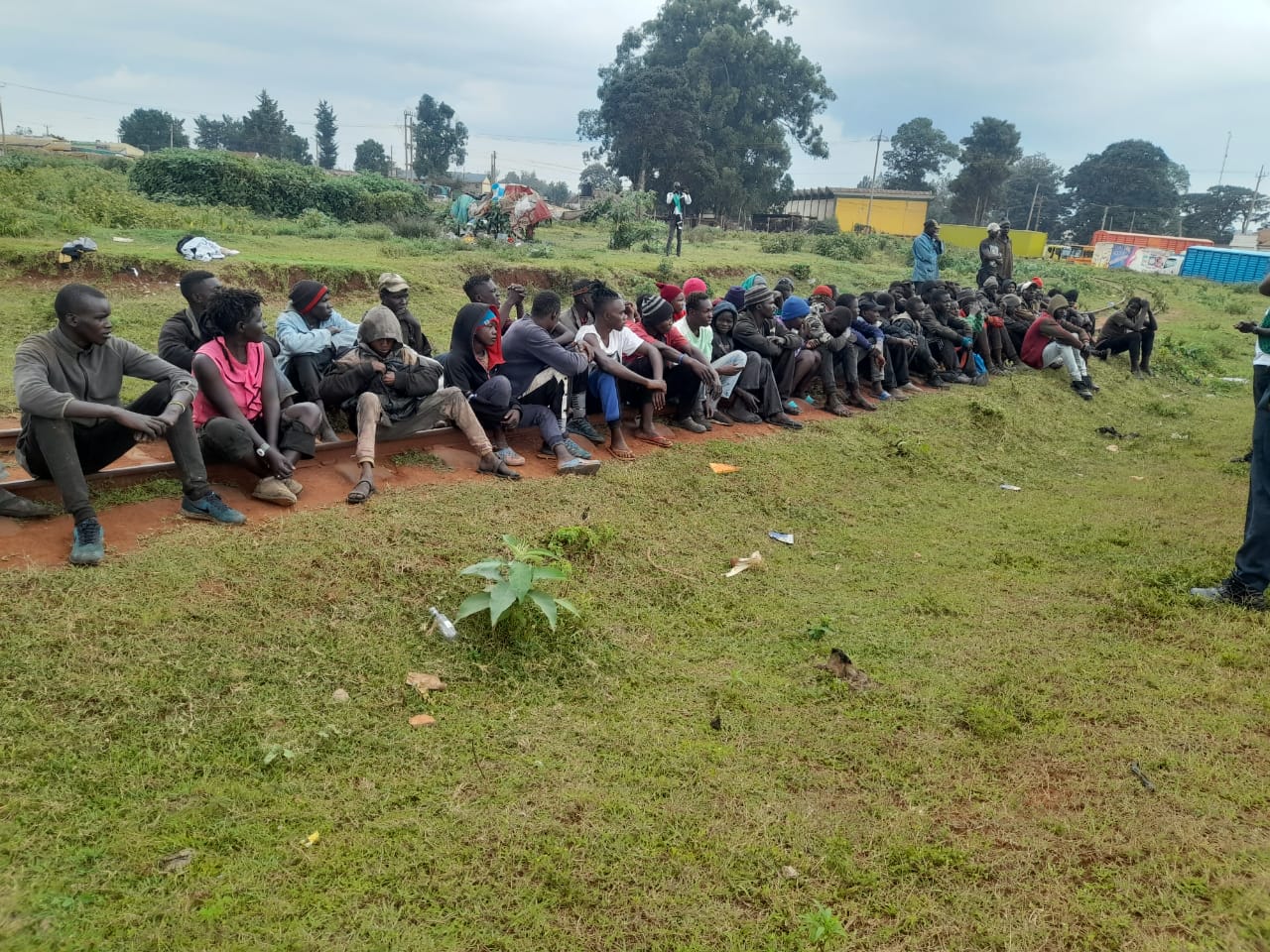
“We have not known any other home apart from the streets of Kitale where we live as brothers and sisters. Chasing us away will worsen our situations,” Muchera said.
He also noted that using force to send them away would be a violation of their human rights.
The street children have since appealed to human rights activists to come to their rescue.
“We are Kenyans like any other Kenyan and we therefore deserve to be treated with dignity. Our rights should be violated because we are less privileged.”
One of the female street children said although some of them have homes, the streets are safer than their homes.
Streets are better than homes for some
“Some of us here found ourselves in the streets because our parents and relatives are very hostile and therefore going back home is not possible,” she said.
She went further to appeal to well-wishers to chip in and enroll some of them to Vocational and Training Centers so that they can get skills and be self-employed.
“Being in the streets does not mean we are fools. Some of us are willing to go to polytechnics where we shall learn technical skills that can help us get out of the streets,” she stated.
The street children spoke when they received early Christmas gifts from FORD Kenya youth league officials.

Led by league’s leader, Harrison Wesa, the officials noted that as much as Governor Natembeya means well, he should put on a human face and provide an alternative place for the children.
“Governor Natembeya, you found this kid in the streets where they know as their only home. Chasing them away will expose them to more risks and dangers, kindly find a safe alternative place for them,” West said.
Loryne Opondo, the Deputy youth leader said the county has finances to construct a children’s home to accommodate the ballooning number of street children.
“We have some female street children who braze the cold nights to survive, instead of sending them away, set aside some funds and build a home for them,” Opondo pleaded.
In addition, Anthony Wanyonyi said beautification of Kitale agenda should not be done at the expense of the safety of hundreds of children who have no home.
Don’t endanger innocent lives, Natembeya told
He said as much as there is a need to make the county’s capital beautiful, that should not be an excuse to endanger the lives of innocent children.
“We shall be therefore to defend their rights in these streets. We are also lobbying for partners who will help us educate some of the street children who are willing to go back to school,” added Sammy Simiyu, a member of the Ford Kenya Youth League.
The United Nations Children’s Fund (UNICEF) defines street children as any girl or boy for whom the street has become his or her habitual abode and/or source of livelihood; and who is inadequately protected, supervised, or directed by responsible adults.
Researchers argue that there are two groups of street children (children on the street who are homeless and streets in urban areas are their source of livelihood where they sleep and live while the second group is children on the street who work and live in the streets in the daytime and return home in the night where they sleep).
It is estimated that there are over 300,000 street children in Kenya whereby around 50% are aged between 11 and 15 years. A majority of them are male.