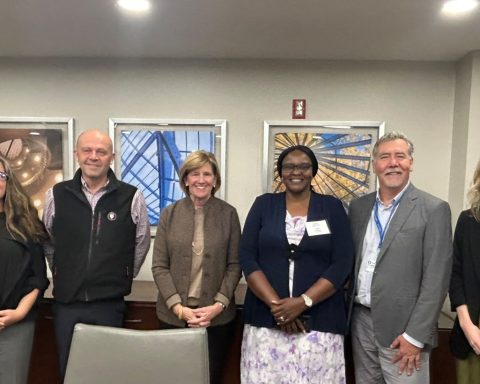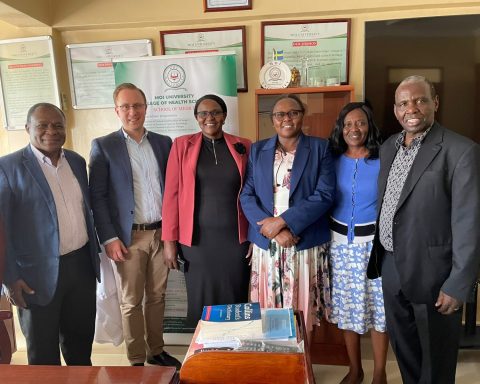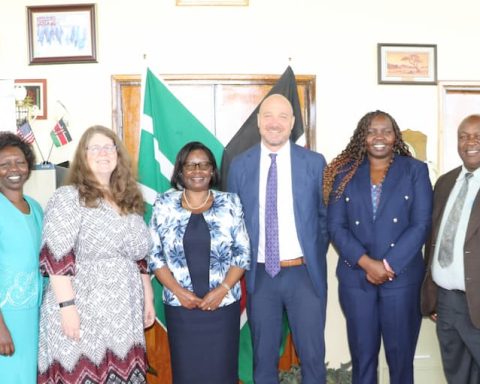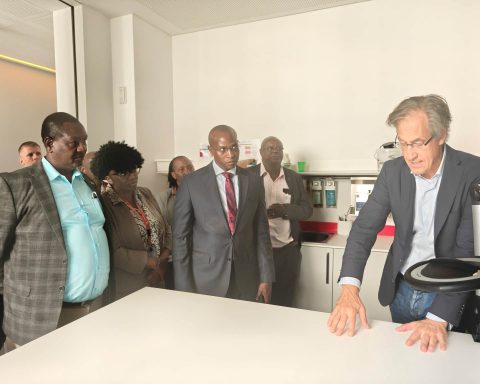

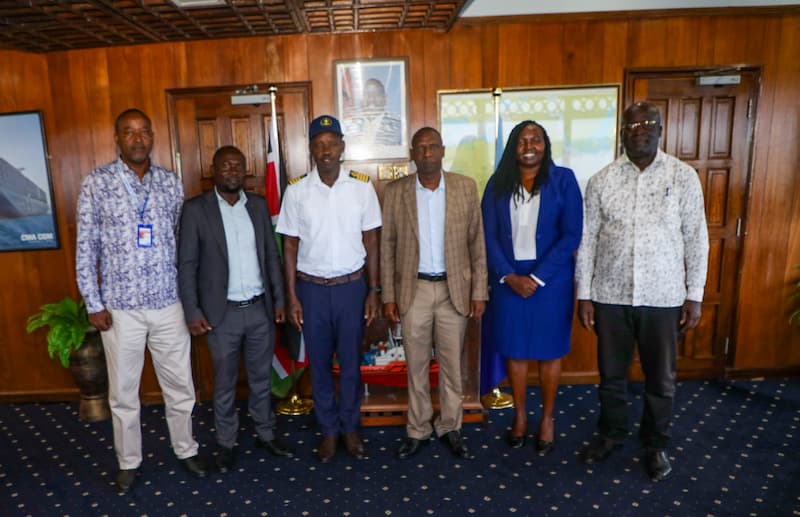
Acting Moi University Vice-Chancellor, Prof. Kiplagat Kotut, has met with Kenya Ports Authority (KPA) Managing Director, Captain William K. Ruto, to review and strengthen the long-standing collaboration between the two institutions.
Central to the discussions was the ongoing implementation of the Partnership for Learning & Skills to Advance Safer Engineering in East Africa (PLEASE) project.
The initiative focuses on building capacity for KPA staff in emerging green maritime technologies, including hydrogen and LNG—and smart port systems. It also targets applied research to improve port efficiency, data innovation for coastal biodiversity protection, and structured apprenticeships for young marine engineering graduates.
Through this partnership, Moi University will benefit in four (4) key areas:
- Applied Research & Consultancy: Faculty will have direct avenues to conduct industry-relevant research and offer consultancy services.
- Student Internships: Students will secure industrial attachments and internship opportunities across KPA facilities.
- Innovation & Tech Transfer: A joint ecosystem will be established to commercialise and transfer new maritime technologies.
- Staff Training: Moi University will design and deliver professional training programs for KPA staff nationwide.
This collaboration bridges the gap between academia and the maritime industry, equipping our graduates with practical skills while positioning both institutions at the forefront of the region’s sustainable blue economy.

About the Partnership for Learning and Skills to Advance Safer Engineering in East Africa
The Partnership for Learning and Skills to Advance Safer Engineering in East Africa (PLEASE) project is a regional capacity-building initiative led by Moi University’s School of Engineering.
Funded by the Lloyd’s Register Foundation (UK) under the Engineering a Safer World program, the project aims to equip engineering students, industry professionals and early-career graduates with the critical skills required to safely adopt emerging digital and green technologies in Kenya and Tanzania.
By focusing on sustainable energy systems, automation and green maritime innovations, the PLEASE project bridges the gap between academic curricula and changing industrial demands to foster a safer, more resilient blue economy across East Africa.