
The Kenyan Government has stepped up the nationwide rollout of the Animal Identification and Traceability (ANITRAC) system.
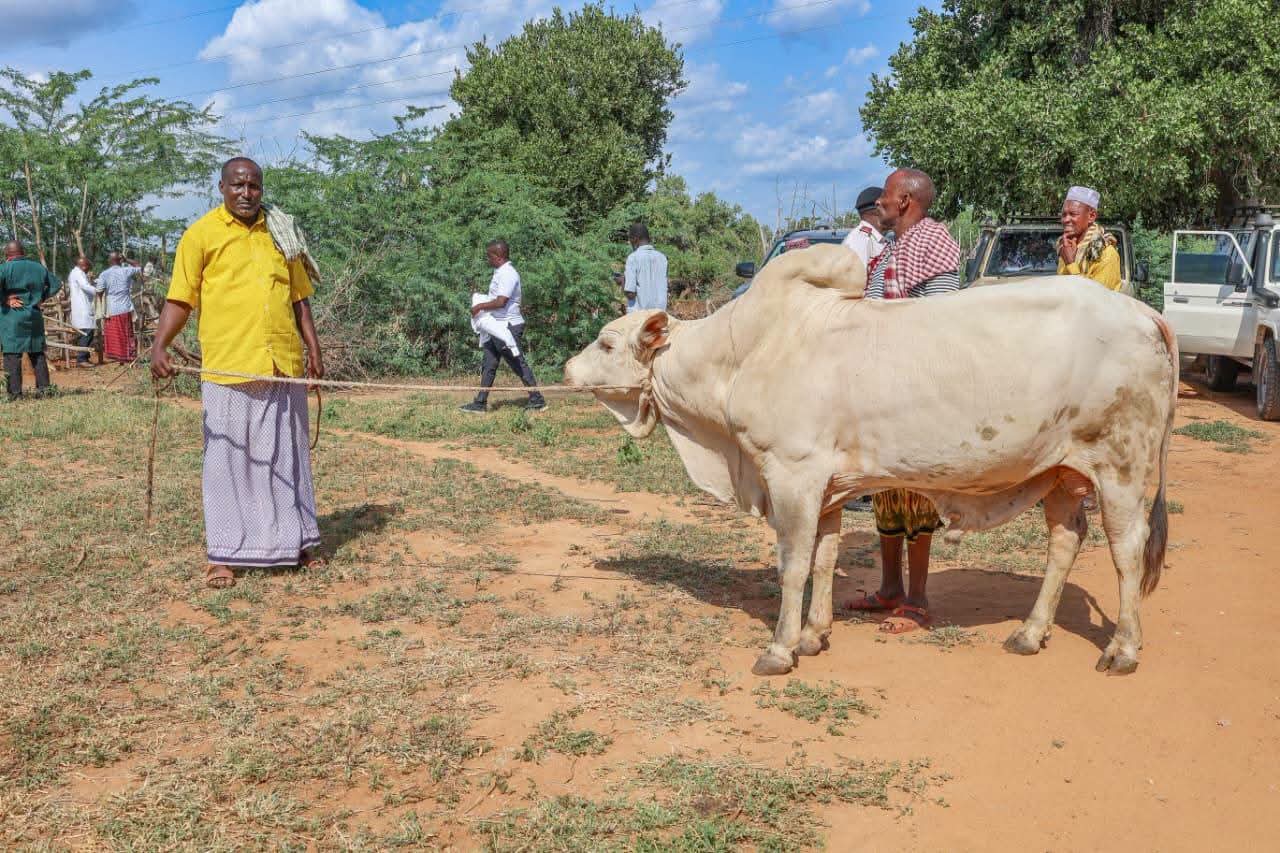
Agriculture Cabinet Secretary Mutahi Kagwe led a livestock sensitization and tagging exercise in Kurawa, Tana River County, following last week’s national launch of the programme in Nyeri.
Accompanied by Tana River Senator Danson Mungatana and officials from the Directorate of Veterinary Services – DVS Kenya, the CS engaged livestock farmers and local leaders on the critical role ANITRAC will play in transforming Kenya’s livestock sector into a globally competitive industry.
Importance of Animal Identification and Traceability (ANITRAC) system
He said ANITRAC is more than a livestock tagging exercise, describing it as “the foundation of a modern livestock economy where every registered animal receives a unique digital identity that guarantees traceability from source to market.”
“Today’s international meat trade is increasingly driven by traceability, with buyers demanding proof of an animal’s origin, movement history and health status before products can access premium export markets,” the CS said.

He urged farmers to fully cooperate with the ongoing registration exercise, saying the Government is taking deliberate steps to unlock lucrative markets in Europe, the Middle East and other international destinations.
However, the Agriculture CS said success will depend on Kenya’s ability to demonstrate credible livestock identification and traceability that meets global standards.
How many livestock are in Kenya
Additionally CS Kagwe noted that Kenya is home to an estimated 77 million livestock, making the sector one of the country’s most strategic economic pillars.
Livestock contributes about 12% of Kenya’s Gross Domestic Product (GDP) and approximately 40% of the agricultural GDP, while supporting the livelihoods of millions of Kenyans, particularly in the Arid and Semi-Arid Lands (ASALs).
He emphasized that ANITRAC will strengthen disease surveillance and control, reduce livestock theft, improve food safety, restore consumer confidence and increase the value of Kenyan livestock and livestock products in both local and international markets.
The CS further highlighted that the ANITRAC ear tags and electronic identification chips are manufactured locally, creating jobs, supporting local industries and demonstrating Kenya’s growing capacity to produce world-class agricultural technologies.
Kenya Leather Industrial Parks
He also pointed to the Government’s investment in the newly established Kenya Leather Industrial Parks, saying the facilities are central to ensuring that Kenya exports value-added leather products rather than raw hides and skins.
By linking a reliable traceability system with local processing and manufacturing, the country will create more employment opportunities, strengthen local industries and ensure livestock generates greater value for farmers and the national economy.
CS Kagwe said the Government’s vision is to transform livestock from a traditional livelihood into a modern commercial enterprise that creates wealth, drives industrialization and positions Kenya as a trusted supplier of safe, traceable and high-quality livestock products.
The nationwide rollout of ANITRAC will continue across all counties as the Government accelerates livestock registration, strengthens animal health systems and lays the foundation for expanded market access, increased farmer incomes and a more resilient livestock sector.