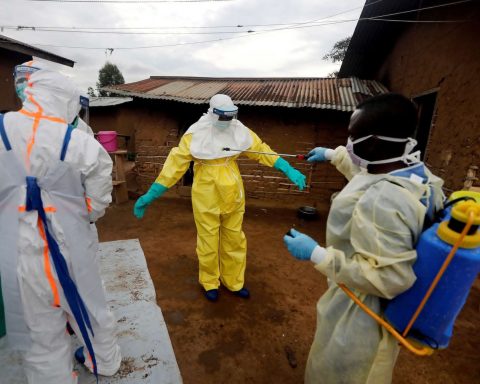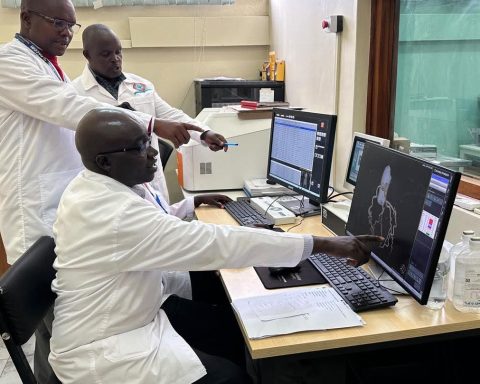


With Kenya on high alert following the Ebola outbreak in Uganda, the government has been asked to focus on increasing the number of public health officers at the points of entry.
The Association of Public Health OfficersKenya (APHOK) says that currently there is a shortfall in the number of those deployed at all points of entry.
According to the association’s Secretary General Mohammed Duba, there are only 289 public health officers deployed at various points of entry among them international airports, sea ports and land crossings.
This, Duda says, is against 512 public health officers that the World Health Organization (WHO) recommends.

“We have a shortfall of public health officers at points of entry. As of today, we only have 289 at the seaport, bare port and land crossing which is inadequate. As per WHO, we need over 500. We are requesting the government to provide the required funds for the officers to be recruited,” Duba told a media briefing in Eldoret town on October 6, 2022.
PPEs for public health officers
The public health officers also lamented that health workers on the front line have not been adequately facilitated with Personal Protective Equipment (PPEs).
“There is no adequate equipment. We don’t have disinfectants which are measures that can protect health workers who are vulnerable,” noted the public health officers’ association secretary general.
“Our officers working at the Jomo Kenyatta International Airport (JKIA), Kisumu, Eldoret, Malaba and Busia are overstretched in man hours they are putting in,” added the association’s Treasurer Daniel Okwara.
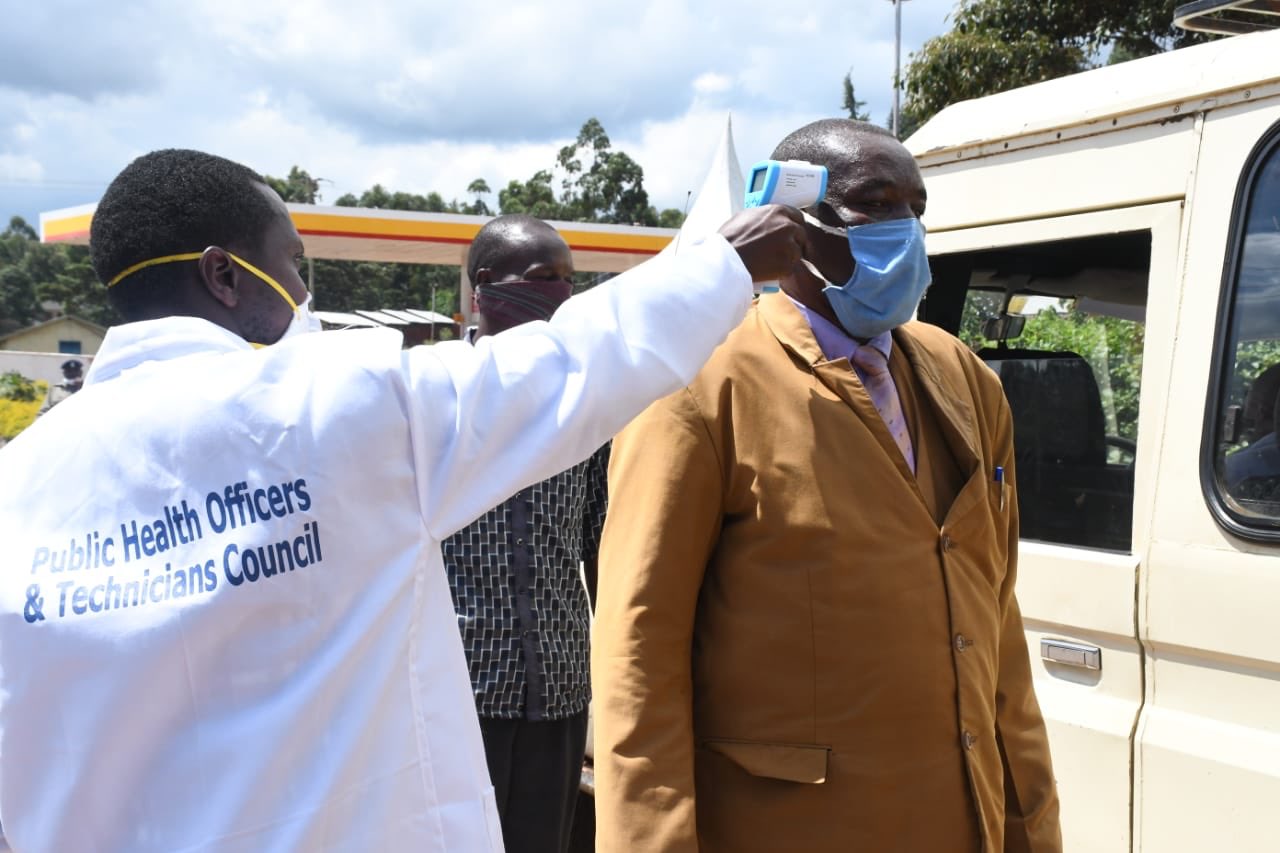
Further, they challenged the Ministry of Health to come up with measures that will enhance surveillance, especially along porous borders.
Kenya has been on high alert since Uganda announced its first Ebola-related death over two weeks ago.
The highly contagious disease has so far killed 36 people including two health workers.
Military in health docket
But even with the country on alert over Ebola, the Public Health Officers want military personnel brought into to health system to help handle the Covid-19 pandemic and returned back to the barracks.
The association notes that a number of military men and women occupied various managerial positions in the Ministry that should now be taken up by trained health workers.
“We appreciate what they have done in giving us collaboration to deal with Covid-19 and help control the disease but we now want them back to their workstations,” Duba said.
At the height of the Covid-19 pandemic, the government tapped into the expertise of the military as it sought to boost its capabilities to tackle the virus that had quickly turned into a pandemic.