

Kenya and Thailand are exploring an expanded agricultural partnership targeting increased bilateral trade, investment in agro-processing, skills development and stronger people-to-people exchanges, as the two countries seek to unlock new opportunities across their agricultural value chains.
Speaking during a meeting with Thailand’s Ambassador to Kenya, Jirusaya Birananda, Agriculture Cabinet Secretary Mutahi Kagwe called for a more ambitious partnership that goes beyond conventional trade to include value addition, technology transfer, institutional collaboration and direct engagement between farmers and agribusiness communities.
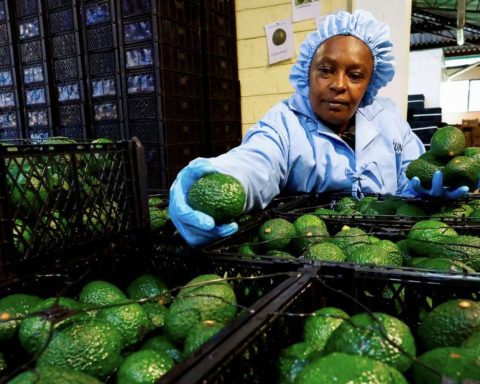
The CS identified coffee, tea and avocados among Kenya’s priority export products, highlighting ongoing engagements involving the Kenya Plant Health Inspectorate Service to open the Thai market to Kenyan avocados.
“We are interested in enhancing our tea exports. We are also introducing coffee, tea, avocado and other products into international markets. The idea is to give consumers choice,” said Kagwe, emphasising the need to expand market access for Kenyan agricultural produce.

He challenged Thai investors to move beyond trading in raw agricultural commodities and establish value-addition enterprises in Kenya, positioning the country as a production and agro-processing hub for the wider regional market.
“We would like Thai business people to come here and start these businesses. If you are going to value-add and take our products to Thai supermarkets, we want that investment to happen here,” he said.
Training partnership between Kenya and Thailand
On skills development, Kagwe called for an expansion of the existing agricultural training partnership between Kenya and Thailand, proposing institutional linkages between agricultural colleges in both countries, increased student exchanges and farmer-to-farmer learning programmes.
He said the partnership should move beyond exchanging one or two trainees to creating a broader programme with tangible impact at the farm level, including opportunities for Thai agripreneurs and students to work alongside Kenyan agricultural extension officers.
The CS also proposed short-term farmer exchange visits, drawing from similar programmes Kenya has undertaken with the United Kingdom, to expose farmers to new technologies, production systems and practical approaches to addressing shared tropical agricultural challenges.
“Instead of one or two people, we should have a bunch of people. That is when you begin to have real impact on the ground,” Kagwe said.
Ambassador Birananda welcomed the proposed expansion, noting that agriculture presents significant opportunities for cooperation under Thailand’s newly launched Thailand-Africa Initiative, which identifies Kenya as a strategic gateway for deeper engagement with the continent.
She called for stronger direct trade arrangements, observing that the actual volume of Kenyan agricultural exports to Thailand may be significantly underrepresented in official bilateral trade statistics because some products enter the Thai market through third-country trading hubs, particularly Dubai.
“Kenya coffee, tea and flowers are already in the Thai market. But when we look at the country of origin, sometimes it is recorded as Vietnam or Dubai because the products go through traders there. We need to find a way to do direct bilateral trade,” she said.
Opportunities for Thai investment in Kenya
The Ambassador singled out coffee as a particularly promising opportunity, noting that Thailand’s domestic production is insufficient to meet the needs of its expanding coffee industry, creating room for quality Kenyan coffee to secure a stronger foothold in the market.

She also pointed to opportunities for Thai investment in Kenya, particularly in agro-processing and the wider agricultural value chain, including packaging, cold-chain infrastructure, logistics and transportation.
Birananda said Thai businesses were increasingly looking towards Africa as Thailand confronts an ageing population, rising labour costs and a less dynamic workforce, making markets such as Kenya attractive for future investment and business expansion.
She, however, emphasised that stronger trade and people-to-people relationships would be critical in building familiarity and confidence between the two business communities before moving towards larger investment commitments.
On agricultural training, the Ambassador disclosed that Khon Kaen University and the Thailand International Cooperation Agency had agreed in principle to approve the second phase of cooperation with the Kenya School of Agriculture.
The proposed second phase will prioritise capacity building for KSA personnel and students, water management and commercial farming. A Thai delegation is expected in Kenya by late November or December 2026 to advance discussions and define the next steps.
The engagement comes ahead of the 60th anniversary of diplomatic relations between Kenya and Thailand in 2027, presenting an opportunity for both countries to translate longstanding diplomatic ties into stronger commercial partnerships, agricultural innovation and mutually beneficial investment
Author
-

 Uasin Gishu News is a leading local news platform dedicated to delivering breaking news, politics, business, development, sports and community stories from Uasin Gishu County. We are committed to informing, educating and connecting our audience through accurate, timely and impactful journalism that highlights the people, events and issues shaping the region. You can reach us by email at uasingishunews.co.ke@gmail.com or on WhatsApp/Call +254106468848.