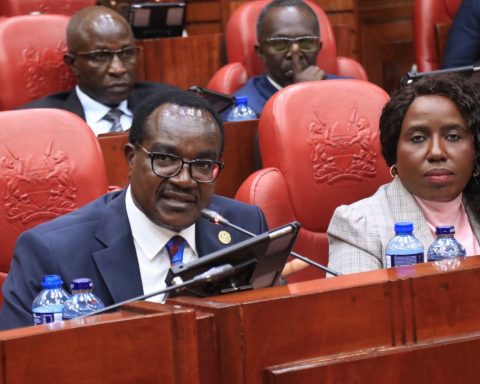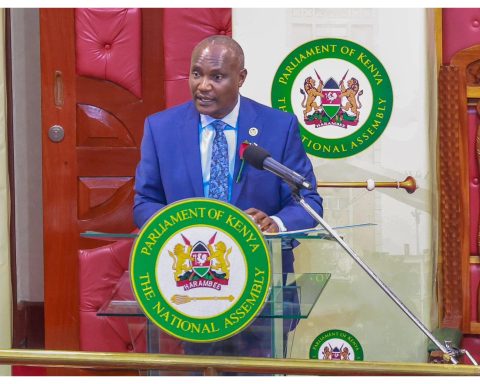


The National Assembly is set to consider six education sector Bills that have been introduced in the House.
The Bills, sponsored by Leader of the Majority Party, Kimani Ichung’wah, seek to address different aspects of the education system, including basic education governance, national assessments, curriculum development, teacher preparation, tertiary education placement and funding, and recognition of academic and professional qualifications.
They include the Basic Education (Amendment) Bill, 2026; the Kenya National Education Assessment Bill, 2026; the Kenya Institute of Curriculum Development (Amendment) Bill, 2026 and the Pre-Service Education and In-Service Training in Basic Education Bill, 2026.
Others are the Tertiary Education Placement and Funding Bill, 2026; and the Kenya National Qualifications Framework (Amendment) Bill, 2026.
Proposals in the Basic Education (Amendment) Bill
The Basic Education (Amendment) Bill, 2026 proposes changes to the legal framework governing basic education, including the administration and governance of institutions, quality assurance and standards, special needs education and the management of education information.
The Bill comes against a backdrop of continuing efforts to align the education system with Competency-Based Education and to address gaps in access and administration.
On the other hand, the Kenya National Education Assessment Bill, 2026 proposes a new framework for national assessment and seeks to replace the existing legal framework governing the Kenya National Examinations Council.
The proposed changes are intended to move assessment beyond an examination-centred approach and provide for competency-based assessment, including the use of electronic assessment and measures to curb examination malpractices.
Mandate of Kenya Institute of Curriculum Development
Additionally, the Kenya Institute of Curriculum Development (Amendment) Bill, 2026 seeks to redefine the mandate of the curriculum development agency and remove overlaps in its functions. The proposed changes would focus the Institute’s mandate on basic and teacher education, while restructuring its governance framework.
Teacher preparation is addressed separately under the Pre-Service Education and In-Service Training in Basic Education Bill, 2026, which seeks to provide a dedicated statutory framework for the training and professional development of teachers. The Bill provides for institutions and structures through which pre-service and in-service teacher education would be coordinated.
At the tertiary level, the Tertiary Education Placement and Funding Bill, 2026 proposes changes to how students are placed and financed in universities, colleges and technical and vocational education and training institutions.
A key proposal is the establishment of the Tertiary Education Funding Authority (TEFA) as a central body for tertiary education financing. The proposed framework would bring together functions currently undertaken by the Higher Education Loans Board, the Universities Fund and the TVET Fund, with the aim of providing a more coordinated system of student financing.
The Bill also proposes changes to the role of the Kenya Universities and Colleges Central Placement Service (KUCCPS) in student placement, while providing a new statutory framework for tertiary education funding.
The Kenya National Qualifications Framework (Amendment) Bill, 2026, meanwhile, seeks to strengthen the national system for recognising and regulating qualifications. Among the proposed measures is a registration framework for institutions that award qualifications and the development of a national qualifications database.
The Bills have been committed to the Committee on Education for public participation.