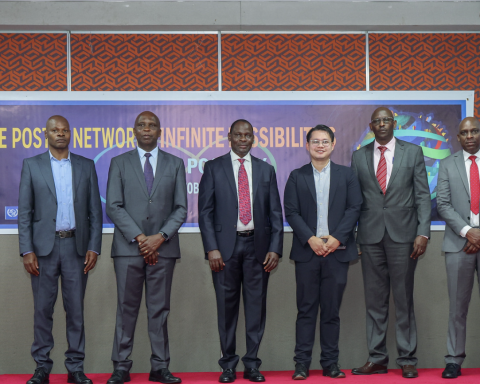


The National Assembly Committee on Communication, Information and Innovation has concluded site inspection visits linked to the National Optic Fibre Backbone Infrastructure (NOFBI) along the Eldoret–Nadapal corridor.
Covering Uasin Gishu and Trans Nzoia Counties, legislators engaged stakeholders within the Soy NOFBI Centre, Huduma and Youth Centre facilities, as well as County Commissioners and County Governments in Uasin Gishu and Trans Nzoia Counties.
The oversight mission focused on assessing the progress of a project central to strengthening Kenya’s digital future.

During the visit, the Committee noted that Uasin Gishu has already laid close to 200 kilometres of fibre, which is supporting platforms such as Sisibo and Konza.
The County is also upgrading ICT Centres into Innovation Hubs to grow digital skills and create opportunities for the youth.
However, challenges remain: the rollout of NOFBI has stalled near Nadapal, leaving some sections incomplete, while several ducts already laid are underutilised. Limited office infrastructure and the high cost of electricity have further slowed ICT operations, forcing counties to turn to solar power as the primary source of energy, with KPLC only used as a backup.

Dagoretti South MP John Kiarie, who chairs the committee, reaffirmed their determination to ensure that these obstacles are addressed, stressing that digital infrastructure remains the backbone of Kenya’s competitiveness.
He noted that the Committee will make strong recommendations to fast-track the completion of the corridor, strengthen ICT facilities, expand innovation hubs in partnership with counties and explore lasting solutions to energy costs, including affordable tariffs for ICT centres.

 Get factual and reliable news as fast as they happen