

Dr. Ouma Oluga’s past tenure as a union leader for medical practitioners came under scrutiny as he appeared before the National Assembly’s Health Committee for vetting as the Principal Secretary Nominee for Medical Services.
The former Secretary General of the Kenya Medical Practitioners, Pharmacists and Dentists Union (KMPDU), was questioned by members of the committee led by James Nyikal (Seme) about his suitability for the position.
Dr Oluga served as KMPDU boss from 2014 to February 2020. He later became the Director of Health Services at the Nairobi Metropolitan Services before being promoted to Senior Director at the Ministry of Health.
Committee members, including Dr. Robert Pukose (Endebess), Anthony Kibagendi (Kitutu Chache South), and Reuben Kiborek (Mogotio), questioned Dr. Oluga about his past, focusing on his reputation as a firebrand unionist.
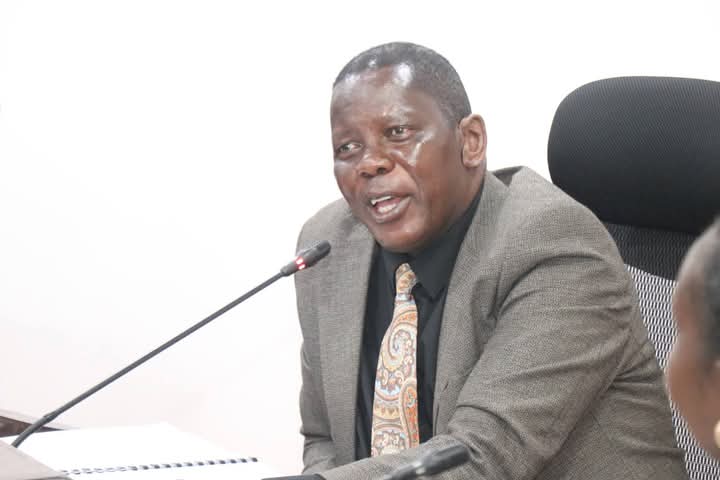
The MPs sought to know how he plans to handle his new role, given his past union activities, and how he would address potential strikes now that he is one of the accounting officers at the helm of the Health Ministry.
Is Ouma Oluga fit to be PS?
“Regarding my past, I bring a lot of skills in organization and mobilization. I believe these skills will be useful when dealing with challenges in the sector,” said Dr. Oluga.
He informed the committee that during his tenure as a union leader, he only led one national strike. However, he pledged to promote dialogue in case of industrial action if confirmed for the position.
“I will closely work with trade unions if I am confirmed for this position. Also, I will explain to them how the government process works,” he said.
“I will be transparent with union officials and explain the situation as it is while seeking joint solutions as I believe it is important to strengthen dialogue. In addition, I cannot shy away from dialogue. I have the ability and capacity to negotiate. However, the negotiation should be based on truth and the available funds,” he added.
Ouma Oluga’s take on SHA
Regarding the ongoing controversy over the rollout of the Social Health Authority (SHA), Dr. Oluga expressed confidence in the new health insurance system, urging Kenyans to be patient.
He noted that the defunct National Health Insurance Fund (NHIF) operated for 59 years and faced challenges, registering only 6 million members. In contrast, SHA and the Social Health Insurance Fund (SHIF) have been in existence for just six months.

One of the main reasons for transitioning to SHA, he explained, is to achieve universal health coverage (UHC). He encouraged Kenyans to support the change, emphasizing that universality is measured by the availability of basic health services to every Kenyan.
“The assurance I give to this committee is that I am fully in support of the shift to SHA and SHIF. Achieving UHC is measured by key indicators of universality. Currently, under SHA, we have moved from 6 million to 21 million members,” he said.
However, Dr. Oluga acknowledged that there are fundamental policy issues that need to be addressed to ensure the smooth rollout of the new system.
“One of the basic issues that can be addressed is building consensus. We must seize the opportunity to involve everyone. One principle I hold dearly is listening to all complaints and examining their sources,” he said.
He stressed that the ministry’s responsibility is to implement policies in line with public expectations, as outlined in Article 10 of the Constitution.
Dr. Oluga also noted that institutional stability is essential, pointing out that SHA is still in its early stages.
“We are comparing SHA to a system that matured over 59 years. It is like comparing a 59-year-old person to a six-month-old child,” he observed.