

Until August 2026, the political landscape in Uasin Gishu County appeared relatively predictable.
The 2027 gubernatorial race was increasingly being viewed as a contest between incumbent Governor Jonathan Bii Chelilim and Tourism Principal Secretary Prof. Julius Bitok. Political conversations largely revolved around established power centres, familiar alliances and succession calculations within existing political formations.
Then August happened. A relatively unexpected entrant announced his gubernatorial ambitions and immediately altered the dynamics of the race. His name is Willy Kenei.
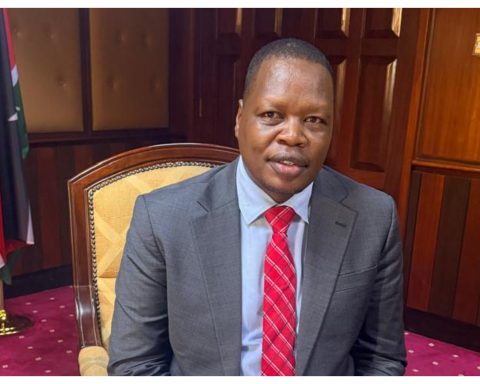
What initially appeared to be the emergence of another aspirant has steadily evolved into a significant political conversation. Kenei’s candidature has challenged the assumption that Uasin Gishu politics must always be defined by established political rivalries. Instead, he is advancing a different proposition: leadership grounded in business experience, institutional exposure, governance competence and economic transformation.
In political circles, this growing phenomenon is increasingly being described as “The Kenei Effect.”
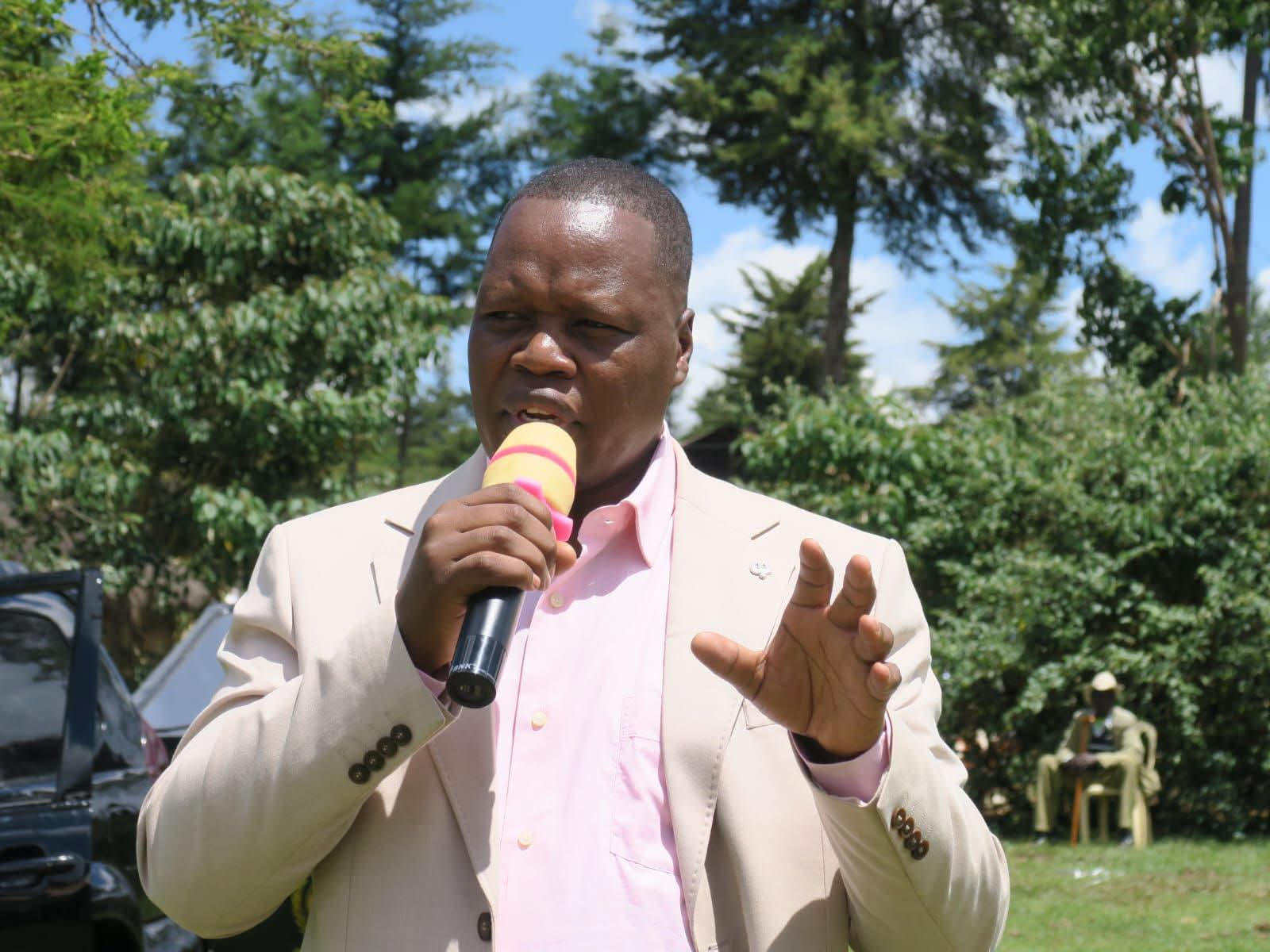
Willy Kenei emerges as a third force in Uasin Gishu gubernatorial race
Politics often produces surprises, and sometimes disruption comes from outside the traditional political establishment.
Before Kenei declared his interest in the gubernatorial seat, much of the political debate centred on the incumbent administration and a potential challenge from Prof. Bitok. The two camps appeared to dominate the political conversation.
Kenei has introduced a third force. Unlike politicians whose influence is built primarily through political mobilisation, Kenei arrives from the world of business and institutional leadership. His networks stretch across entrepreneurs, investors, government agencies, educational institutions and development stakeholders.
That gives him a distinct political identity.
Rather than presenting himself as another political personality, Kenei is positioning himself as an alternative leadership model. His argument is that Uasin Gishu requires a governor who understands how to manage institutions, attract investment, create employment and transform economic potential into measurable development.
This message is beginning to resonate with voters who believe the county’s next phase of growth demands a different approach.
How KNCCI Uasin Gishu chairman Willy Kenei built his leadership credentials
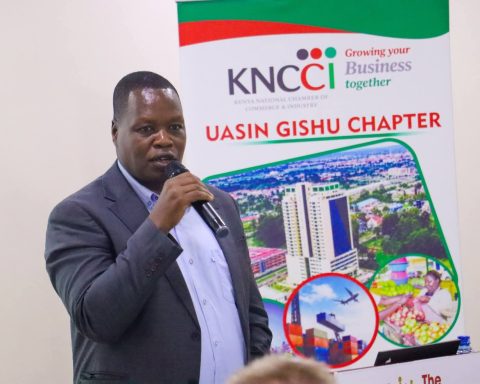
One of Kenei’s strongest credentials is his private-sector experience. He is a seasoned entrepreneur and currently serves his second term as Chairman of the Kenya National Chamber of Commerce and Industry (KNCCI), Uasin Gishu Chapter. Through this role, he has engaged extensively with businesses, investors, government institutions and development partners.
His work has exposed him to challenges surrounding market access, taxation, financing, regulation and the overall cost of doing business.
From these engagements, Kenei has developed a central argument: sustainable development cannot rely solely on government expenditure. Counties must create conditions that allow businesses to thrive, investors to operate confidently and entrepreneurs to generate employment opportunities.
That economic philosophy now forms the foundation of his political campaign.
For Uasin Gishu, a county with vast agricultural potential, a strategic location and a growing urban economy, Kenei sees opportunities that extend beyond traditional economic activities. His vision emphasises manufacturing, agro-processing, industrial investment and value addition.
His proposition is straightforward: farmers should earn more from their produce, young people should find jobs within the county, and local enterprises should have opportunities to grow into major businesses.
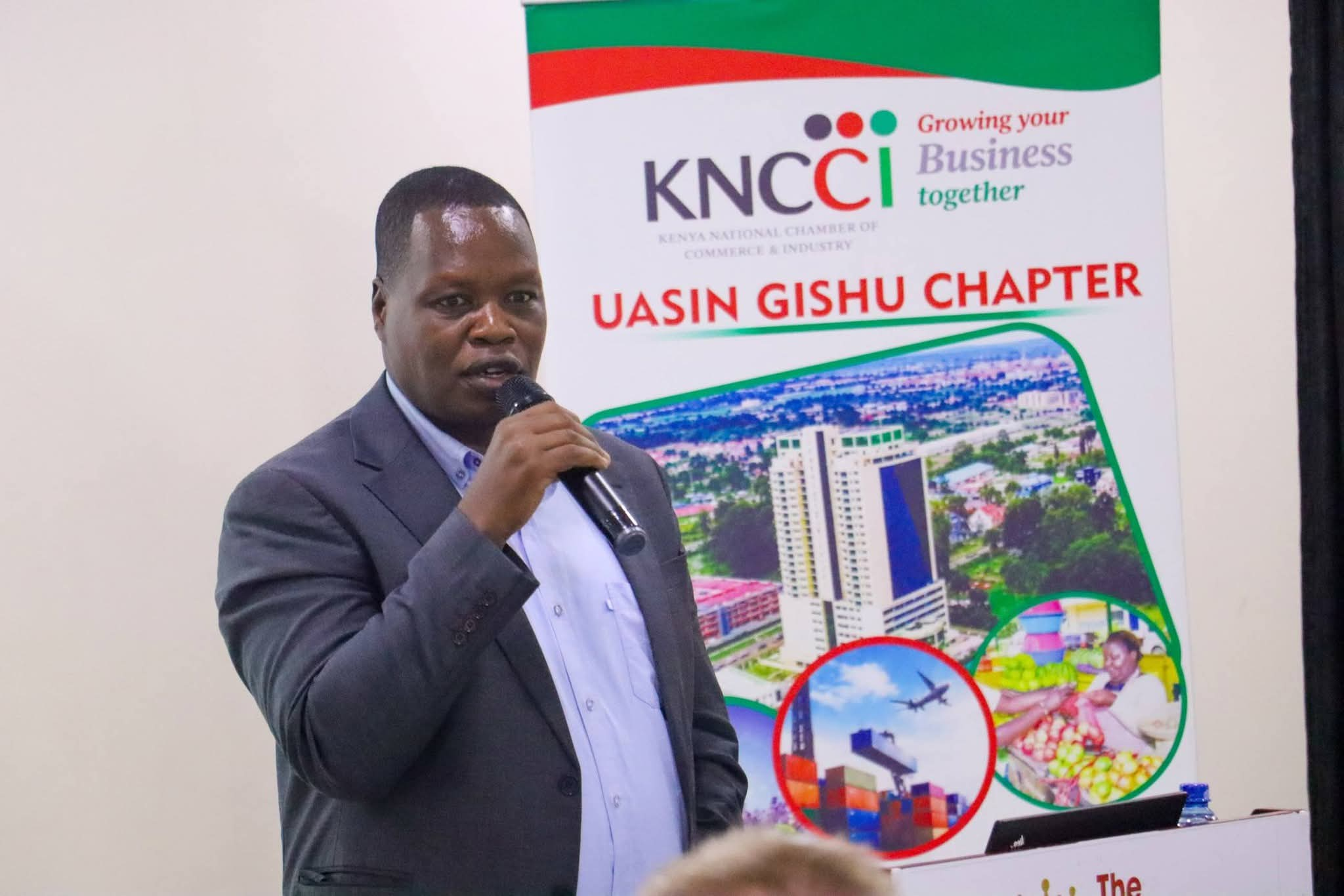
EPZA experience shapes Willy Kenei’s industrialisation agenda
Kenei’s experience extends beyond KNCCI. He also serves as a Director at the Export Processing Zones Authority (EPZA), where he chairs the Strategy and Business Development Committee. The position has exposed him to investment promotion, export manufacturing, industrial development and value-addition initiatives.
This experience directly informs his ambitions for Uasin Gishu.
Although the county remains one of Kenya’s leading agricultural producers, Kenei argues that more value should be retained locally through processing and manufacturing. Why should raw agricultural products leave the county while industries that create additional value are located elsewhere? Why should thousands of young people seek jobs outside the county when opportunities could be created closer to home?
These are the economic questions he wants to bring to the heart of county leadership.
Supporters believe his EPZA experience gives him an advantage in understanding how investment can be attracted and industrial growth accelerated. They see him as someone capable of helping bridge the gap between economic potential and actual industrial development.
The Eldoret City status legacy and Kenei’s development narrative
Another significant pillar of Kenei’s public service record is his involvement in Eldoret’s elevation to city status.
He chaired the Ad Hoc Committee tasked with examining the conferment of city status on Eldoret Municipality, a process that culminated in a historic milestone for Uasin Gishu and the wider North Rift region.
For many residents, city status represented more than a symbolic achievement. It created an opportunity to reposition Eldoret as a major commercial, educational and investment destination.
However, city status also brings heightened expectations. Residents increasingly expect better roads, improved drainage, efficient waste management, organised public transport, modern markets, affordable housing and quality infrastructure.
Kenei’s supporters argue that his involvement in the city-status process demonstrates an understanding of both the opportunities and challenges that accompany urban growth. It has become an important element of his leadership narrative and raises an emerging political question: could the man who helped guide Eldoret’s journey to city status become the governor responsible for overseeing its next phase of transformation?

Why Willy Kenei wants skills development linked to job creation
Kenei also serves as Chairman of the Board of Ziwa Technical Training Institute, a position that has exposed him to the challenges facing young people seeking skills and employment.
One issue he frequently highlights is the disconnect between education and the labour market. Many graduates leave institutions with qualifications but struggle to find jobs because their training does not always align with industry needs.
His solution focuses on stronger collaboration between training institutions and industry, practical skills development, entrepreneurship and technical education.
For Uasin Gishu, this could mean closer partnerships between TVET institutions, manufacturers, agricultural enterprises and investors. The goal would be to ensure young people gain skills that translate into employment, enterprise creation and economic independence.
In a county with a large youthful population, this message carries particular significance.
A different campaign style focused on governance and service delivery
Perhaps the most notable feature of Kenei’s emerging political identity is his style of engagement.
His campaign has largely focused on policy discussions, public consultations and development ideas rather than constant political confrontation. This contrasts with a political culture where personalities and factional rivalries often dominate public discourse.
Kenei’s argument is that county leadership requires far more than political popularity. It demands administrative competence, financial discipline, strategic planning and the ability to deliver outcomes.
He is attempting to position competence and economic management as central issues in the gubernatorial race.
Whether this approach can evolve into a countywide political movement remains one of the defining questions of the campaign.
Why the Kenei effect is reshaping Uasin Gishu politics
What makes the Kenei phenomenon politically significant is its challenge to long-standing assumptions about influence and power in Uasin Gishu.
For years, political calculations have largely centred on established personalities and competing camps. Kenei is introducing a different constituency into the conversation, one that includes entrepreneurs, professionals, traders, investors, educators and people focused on economic development.
These networks are not automatically electoral votes, but they provide the foundation for a potentially broader coalition.
His candidature also offers voters an alternative to traditional political alignments. Rather than asking which camp should control the county, Kenei wants voters to focus on competence, economic transformation and institutional leadership.
That shift alone has already changed the conversation.

Can business leadership translate into electoral support?
Despite the attention surrounding his entry into the race, significant challenges remain.
Business leadership and public administration are not identical. Running a county requires political consensus, accountability, equitable resource distribution and responsiveness to diverse community needs.
Voters will want detailed answers on healthcare, agriculture, infrastructure, public finance and service delivery. They will also want to see whether his professional credentials can translate into practical benefits for ordinary residents.
The incumbent administration still has its record to defend. Prof. Julius Bitok retains his own political profile and networks. Other contenders may also emerge before 2027.
For Kenei, political momentum must eventually be converted into an organised grassroots movement capable of competing across the county’s constituencies.
The growing influence of the Kenei effect in Uasin Gishu
The Kenei Effect is about more than a single candidate. It represents an attempt to reshape the political conversation in Uasin Gishu by placing economic transformation, institutional competence and development-focused leadership at the centre of public debate.
Kenei’s background in business, his leadership at KNCCI, his role at EPZA, his involvement in Eldoret’s city-status journey and his engagement in technical education have provided the foundation of that argument.
Whether those credentials ultimately translate into electoral victory remains uncertain.
What is already clear, however, is that the assumption that Uasin Gishu’s gubernatorial contest is merely a battle between two established political camps can no longer be taken for granted.
Willy Kenei has entered the conversation and altered the political arithmetic.
As the 2027 elections draw closer, the key question facing voters is no longer whether there is a third force in the race.
It is whether that third force can become the county’s next governor.
Author
-

 Uasin Gishu News is a leading local news platform dedicated to delivering breaking news, politics, business, development, sports and community stories from Uasin Gishu County. We are committed to informing, educating and connecting our audience through accurate, timely and impactful journalism that highlights the people, events and issues shaping the region. You can reach us by email at uasingishunews.co.ke@gmail.com or on WhatsApp/Call +254106468848.