
JOHANNESBURG, South Africa, 30 September 2026 -/African Media Agency(AMA)/ – How much agency does a brand actually need? It is an awkward question for an industry that has spent decades selling size as reassurance. More offices meant more reach. More people meant more capability. A global network meant someone, somewhere, had the answer. For clients, buying big felt like buying certainty.
Now that certainty is open to challenge. If a smaller team can put senior decision-makers closer to the work, move faster and use AI to expand what it can deliver, what exactly does the bigger agency offer that the client still needs?
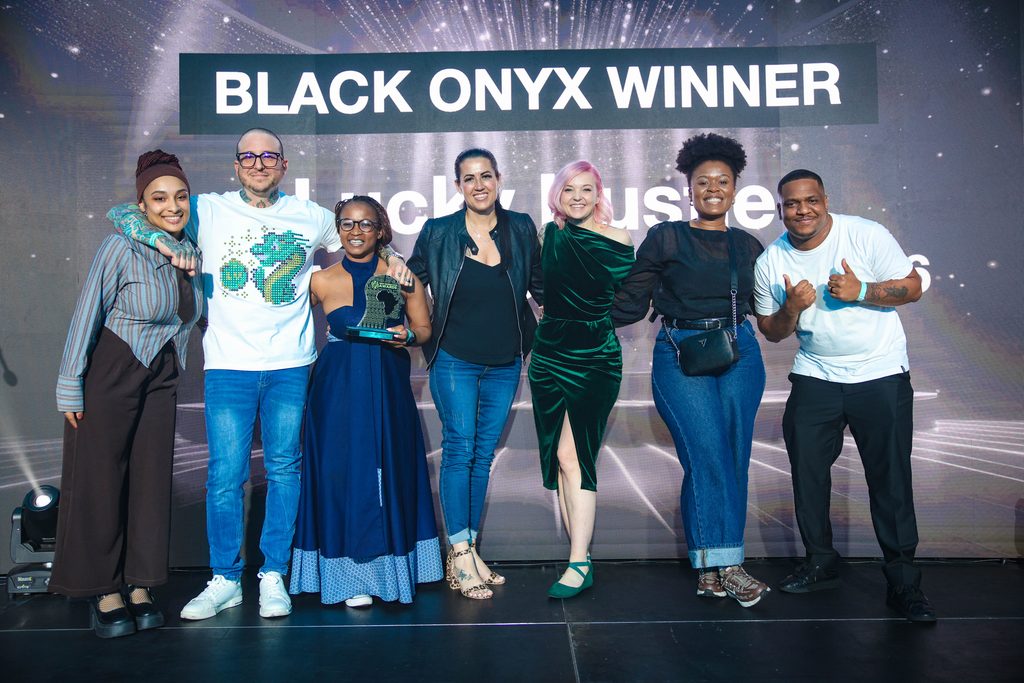
Lucky Hustle’s second consecutive Small Agency of the Year win at the 14th Wesbank New Generation Awards offers a timely case study. Retaining the title invites scrutiny of the decisions, people and leadership behind the work.
Lucky Hustle scooped several awards at the event, including:
- Black Onyx – Small Agency of the Year 2026
- Black Onyx – Kyle Anthony as Top Graphic Designer of the Year
- Gold – Most Innovative Use of Social and Digital Media
- Gold – Best Influencer Marketing Campaign
- Gold – Best Use of Podcast to Promote a Brand
- Bronze – Best Low Budget Campaign
- Bronze – Mobile Marketing Excellence
Lucky Hustle’s Titan Tough campaign for Xiaomi South Africa was the highest-scoring campaign across the entire awards evening, repeating the distinction earned by its Legacy of Ludumo Lamati campaign last year. Achieving the top score for two consecutive years, for two different campaigns, adds further weight to the agency’s success and demonstrates the consistency of its work against the strongest entries in the competition.
For founder and CEO Darren Morris, the interesting story is how the agency keeps winning, and whether growing its capabilities still requires growing its headcount.
Scaling what matters
For years, the advertising industry operated on the assumption that bigger meant better. More offices, people, specialists and clients, backed by a global network, made an agency look like a safer bet. Scale was both a business model and a mark of credibility.
Then the market changed.
As clients expected more and budgets came under closer scrutiny, the structures that once gave large agencies their strength became harder to justify. Layers of management, complex processes and large teams increasingly raised questions about cost, speed and value.
Into that space has stepped a different kind of agency.
Lucky Hustle, South Africa’s intelligence-first creative agency, has just been named Small Agency of the Year for the second consecutive year. The significance is not simply that a relatively young independent agency has another trophy on its shelf. It is that the same category is beginning to tell a larger story about where the agency business is going.
Reflecting on 2025, Yardstick described it as the “Year of the Independent Agency”, reporting that smaller, owner-managed agencies won the majority of the pitches it facilitated during the year, including major South African advertiser accounts. According to Yardstick, their appeal lies in nimbleness, flexibility and speed, alongside the ability to use AI and technology to scale ideas without necessarily scaling headcount.
That shift is taking place against a market where agencies are having to fight harder for every piece of business. Scopen’s first South African New Business Report found that creative agencies participated in an average of 47 pitches in the preceding year, with an average conversion rate of just 17%. Meanwhile, marketers themselves are under increasing pressure to justify expenditure and demonstrate business impact. Agency Scope’s 2025 research was on track for a record 710 interviews, almost quadrupling participation compared with previous waves.
“The implication is subtle but important. Clients are not necessarily looking for the biggest agency in the room. They are looking for the agency that can make the room matter,” says Morris. “That is where independence becomes interesting.”
“An independent agency does not automatically have better ideas, better people or better answers. But it can operate with a different rhythm. Decision-making can be closer to the work. Senior talent can be closer to the client. The distance between problem, idea and execution can be shorter,” he adds.
For Lucky Hustle, that model is increasingly intertwined with technology.
Great tools still need great minds
The agency’s previous awards include Gold for Best Use of AI in Marketing and Gold for Best Low Budget Campaign, alongside its Small Agency of the Year recognition. The combination is revealing. AI is not being used simply as a badge of modernity. It is part of a broader proposition: that a smaller team can use technology to extend its capabilities without having to reproduce the scale of a traditional agency.
But technology alone is not the story. If anything, AI makes the human part of the agency more important.
As sophisticated tools become more widely available, agencies stand apart through the thinking they bring to them. That thinking starts before anyone writes a prompt. It depends on asking the right questions, understanding the cultural context and applying sound strategic judgement. It also takes creative instinct to recognise which ideas are worth pursuing.
That may be one reason the independent model is having its moment. The question is no longer simply how many people sit inside an agency. It is what those people can make happen.
And that distinction matters in a market where digital advertising alone grew 21.5% in 2023 to R17.7 billion, according to the IAB South Africa and PwC Online Advertising Revenue Report. The proliferation of channels, formats, platforms and technologies has created more complexity, not less.
Clients need agencies capable of navigating that complexity without creating another layer of it. “Perhaps that is the real story behind Lucky Hustle’s two consecutive wins,” comments Morris. “Not that small agencies can compete with big agencies. But that they increasingly do not need to become big agencies to compete.”
The definition of ‘big’ is changing
The independent agency of the future may not be defined by what it can do with less. It means less distance between the idea and the decision; less bureaucracy between the client and the senior team and less production friction. Less dependency on scale.
For Lucky Hustle, the next test is whether it can keep delivering as briefs become more demanding and clients expect more. “Like every ambitious agency, we will need to make sound decisions about where to invest, who to hire and how technology can improve the work”, says Morris.
But brands have a decision to make, too. If they can access the thinking, talent, and delivery they need from a smaller team, a larger agency has to explain what its added scale buys.
Lucky Hustle has retained its title. The more consequential contest is to demonstrate it can deliver what matters more than how big it is.
Distributed by African Media Agency (AMA) on behalf of Lucky Hustle
About Lucky Hustle
Lucky Hustle is an award-winning creative agency that brings together strategy, design, content and technology to help brands connect with audiences and grow. Led by founder and CEO Darren Morris, the agency combines hands-on senior leadership with AI-enabled production to turn ideas into work that delivers for clients. Lucky Hustle was named Small Agency of the Year at the WesBank New Generation Awards in both 2025 and 2026. For more information, visit www.luckyhustle.co.za.
The post Africa’s best-kept secret, Lucky Hustle, takes Small Agency of the Year at the 14th Wesbank New Generation Awards for a second year appeared first on African Media Agency.