
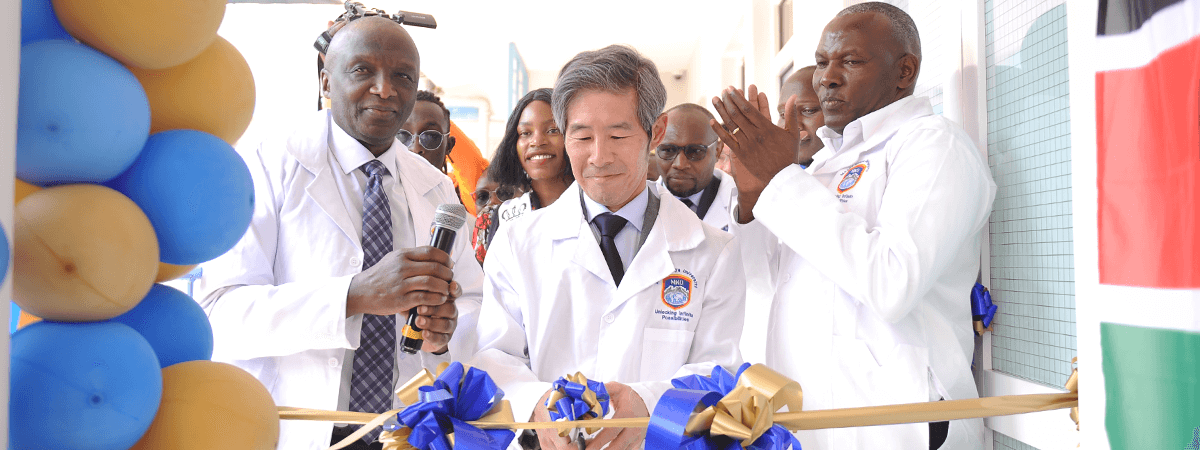
The Mount Kenya University and Japan International Cooperation Agency (JICA) have unveiled a Centre for Malaria Elimination and the Institute of Tropical Medicine.
The Ksh450 million project for Interdisciplinary Research for Integrated Community-Directed Strategy for Sustainable Freedom from Malaria, funded under the SATREPS scheme, has made substantial investments in the fight against malaria.
Out of the total project cost, Ksh300 million has been allocated for activities in Kenya and Ksh150 million for activities in Japan.
The funds are meant for the establishment of a cutting-edge molecular and immunology laboratory at MKU’s Thika campus.
The state-of-the-art facility enables advanced research and diagnostics for malaria.
Researchers and students from MKU and collaborating Japanese universities, such as Osaka City University, have since benefited from exchange training programs, enhancing their skills and knowledge in malaria research.
Ambassador Ken Okaniwa, Embassy of Japan, graced the inauguration of the Centre for Malaria Elimination at Mount Kenya University as the Chief Guest on 14th July 2023.

The Center for Malaria Elimination is a significant milestone in the collective pursuit of a healthier, malaria–free brighter future.
New strategies
This reaffirms the commitment of MKU to advancing scientific knowledge, fostering innovation and working hand in hand with local communities and global partners to achieve a malaria-free future.
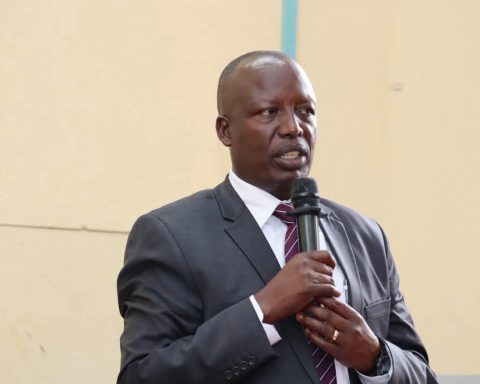
“Malaria remains a formidable global health challenge, disproportionately affecting the most vulnerable members of society, particularly children and pregnant women. The researchers are investigating antimalarial drug resistance, a growing concern in the global fight against malaria,” said Prof Deogratius, Vice-Chancellor, MKU.
“By studying the mechanisms of resistance, we thus do strive to develop new strategies and therapies that can overcome this challenge and ensure the efficacy of available treatments. The production of the innovation-driven diagnostic tools will provide accurate and rapid diagnosis, enabling timely treatment and preventing the spread of the disease.”
Dr Jesse Gitaka, Director, Grants and Development, MKU and Principal Investigator assured that the integrated community-directed strategy has led to improved fever case management through the use of XN-30 diagnostic equipment, which offers faster and more accurate diagnosis compared to traditional microscopy and PCR methods.
The project has strengthened malaria vector control by establishing an entomological monitoring system at KEMRI-Kisumu.
In addition, the implementation of a cluster randomized control trial for ceiling nets with OlysetPlus and other large-scale vector control interventions has shown promising results in reducing malaria transmission.

The laboratory at the Thika campus will continue to be a vital resource for capacity building and cutting-edge research. MKU envisions expanding its research collaborations and further enhancing its role in policy development.
Lasting impact
With a focus on malaria elimination, MKU aims to contribute to the generation of evidence-based interventions that will have a lasting impact on the health and well-being of communities affected by malaria.
MKU Pro-chancellor, Dr Vincent Gaitho emphasizes MKU’s continued support of the SDGs 2030, the East Africa Community’s Vision 2050 and the Kenya Vision 2030 through the Center and all other University activities.
The Center for Malaria Elimination at Mount Kenya University shall also always serve as MKU’s lasting commitment to academic excellence, groundbreaking research, and profound societal change for the greater common good.