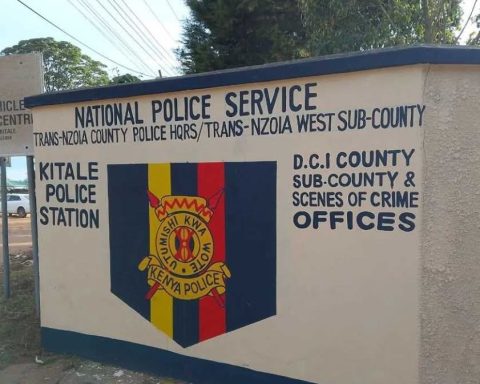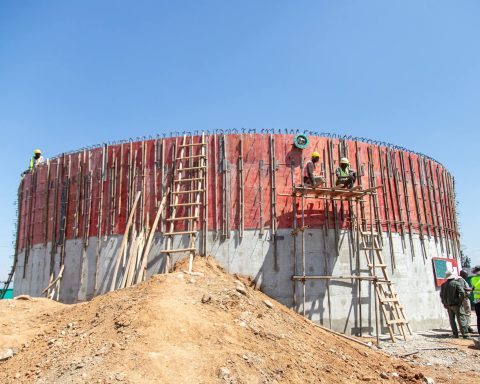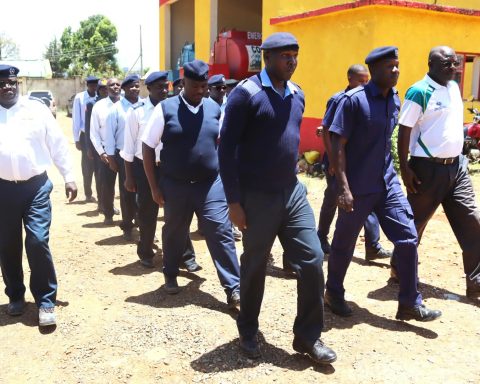


Trans Nzoia County is witnessing a major infrastructural transformation in five informal settlements of Kipsongo, Shanti, Mitume, Tuwan and Matisi under the Kenya Informal Settlements Improvement Project Phase Two (KISIP2).
The project is supported by AFD, IDA, the European Union and the World Bank.
Speaking during the 13th site visit, County Executive Committee Member for Lands, Physical Planning, Housing and Urban Development, Pius Gumo, confirmed that the works are 80.4% complete and progressing well. He expressed confidence that the project will meet its contractual timelines.
“The development is not just about roads and lights. It’s about changing lives. With clean water and proper lighting, our people can live better, do business longer and feel safer,” said Gumo.

What do KISIP2 projects in Trans Nzoia entail?
The project includes the installation of high mast floodlights and street lighting to enhance security and extend business hours for residents.
Additionally, access to clean and safe water is expected to reduce waterborne diseases by nearly 50%, according to CECM Gumo.
He emphasised the importance of community involvement, saying, “The locals are the key stakeholders. They must be part of this journey because they are the ones who will use and protect these facilities.”
Echoing his sentiments, Chief Officer for Lands, Housing and Urban Development, Dr Roselyn Nasiebanda, lauded the partnership between the County and National governments and development partners.
“This collaboration has opened up these areas. We are seeing real change in accessibility and livelihoods,” Dr Nasiebanda said, adding that community support has played a big role in the project’s success.

National Committee Project Coordination Team (NCPCT) representative, Blanton Gitau, urged all parties, contractors, consultants and county officials to adhere strictly to World Bank standards.
He also raised concerns about road safety and improper discharge of grey water, calling on community groups like the Settlement Executive Committee (SEC) and Grievance Redress Committee (GRC) to sensitise residents.
“There must be proper drainage. Let’s not allow wastewater to damage these roads we’ve worked so hard to build,” Mr Gitau said.
When will KISIP projects in Trans Nzoia be complete?
Project Site Engineer, Eng Martin Maina, confirmed the expected completion date as 6th November this year. He called for continued cooperation from the community to ensure timely delivery.
Consulting Engineer Jorim Oduor urged residents to take ownership of the project, especially in safeguarding street lighting infrastructure from vandalism.
“Once we finish, we leave. But the community remains. It’s their responsibility to protect and maintain what has been built,” Eng Oduor further said.