
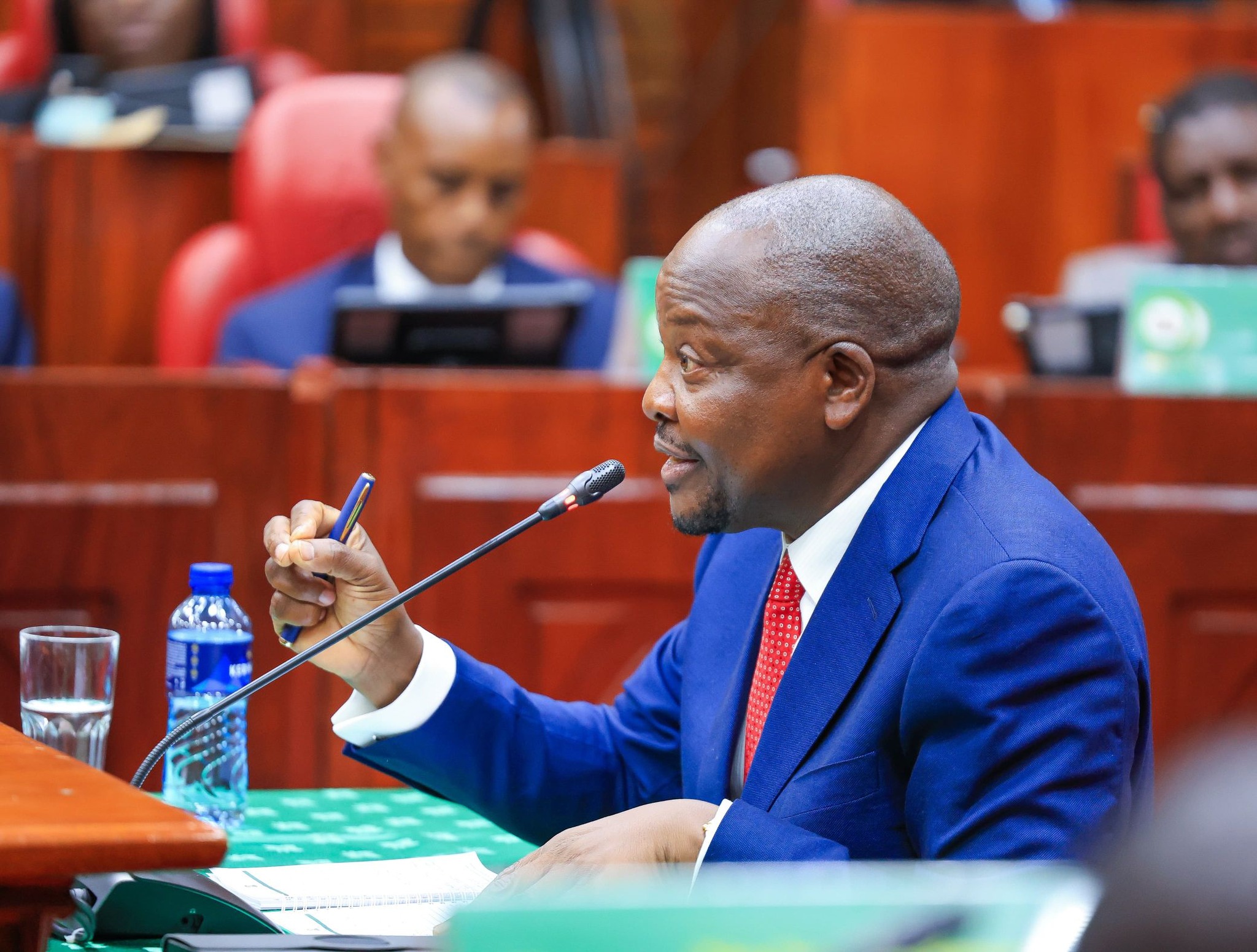
Cabinet Secretary nominee for Agriculture and Livestock Development Mutahi Kagwe has pledged to implement reforms in the Agriculture sub-sector driven by science, address climate challenges, and apply lessons from the COVID-19 pandemic to transform Kenya’s agricultural sector.
Before the Parliamentary Committee on Appointments, chaired by Speaker Moses Wetang’ula, Kagwe outlined a bold vision to enhance food security and sustainability.
He emphasized the importance of scientific research in guiding policies, ensuring that agricultural products are safe and sustainable.
His remarks come amid the ongoing debate on the planned mass vaccination of livestock, genetically modified organisms (GMOs) and climate change.
What did Mutahi Kagwe say about livestock vaccination?
Regarding livestock vaccination, Kagwe proposed a consultative approach to engage farmers and provide accurate information.

“The decision to vaccinate livestock ultimately lies with the owner. Experts will be involved to address any misconceptions and provide facts,” he stated.
The Agriculture CS nominee also took a firm stance on GMOs, emphasizing that no product would be introduced in Kenya without thorough scientific validation.
“We are not guinea pigs,” he declared. He assured the Committee that under his leadership, no untested products banned elsewhere would be approved in Kenya.
On the impact of climate change on agriculture, Kagwe called for the adoption of drought-resistant crops and livestock.
Role of AI in Agriculture
In addition, he highlighted the role of technological advancements, including artificial intelligence, in improving weather prediction to help farmers adapt to unpredictable conditions.
“Our ability to predict weather patterns will become increasingly precise,” he noted.
Kagwe also emphasized sustainable farming practices, such as integrating tree planting with crop farming, to address environmental concerns. Referring to the European Union’s deforestation regulations, he expressed confidence in Kenya’s efforts to meet global standards.
Drawing from his experience during the COVID-19 pandemic, the former CS highlighted the importance of communication and collaboration in managing crises.

He noted that frequent updates during the pandemic kept the public informed, a strategy he plans to replicate in the agricultural sector.
“Agricultural policies must be developed in consultation with farmers, experts, and stakeholders,” he said.
Kagwe further criticized Kenya’s taxation policies on agriculture, describing them as a barrier to growth.
He called for reforms to reduce taxes on exports and transport, arguing that a broader tax base with lower rates would benefit the sector.
“It is better to have more businesses taxed at lower rates than to overburden a few,” he remarked.