

A group of Education experts from South Korea have showered praises on Kenya’s competency-based curriculum (CBC).
The experts led by Professor Kim Duk Ho and Professor Lee Ji Yeon say CBC is the best education system, especially for the young generation.
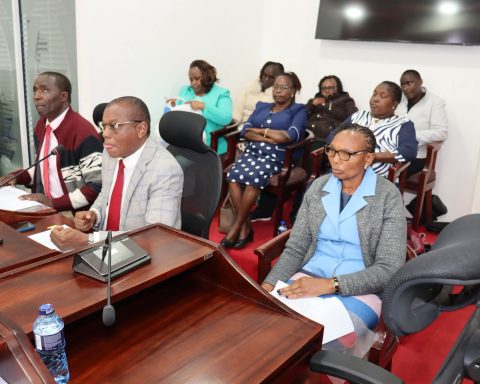
They spoke during a capacity-building seminar for 20 Technical and Vocational Education (TVET) working-level officials from Kakamega County.
The seminar is part of the Korea International Cooperation Agency (KOICA) flagship fellowship program dubbed Capacity Improvement and Advancement for Tomorrow (CIAT) whose first phase has been implemented.
The Youth and Women Empowerment Program is aimed at improving the quality of TVETs in Kenya by developing the competency of TVET instructors’ teaching methods and curriculum.
Further, the South Korean education experts said there will always be a race between technology and education.
This, the experts noted, is the reason many graduates, especially from the TVET sector experience a skills mismatch in the job market.
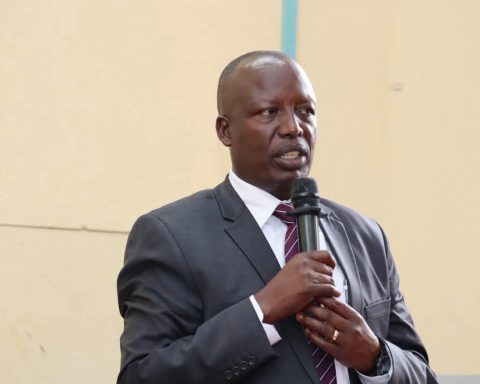
“Companies are spending a lot of money in re-training graduates from TVET institutions to fit in their job description and meet the current technology. This makes them not create more employment space across the board. But with competency-based education, the young men and women will be able to get skills at their tender age that closely matches the technology being used in the diffrent industries,” said Professor Kim Duk Ho.

On her part, Prof Lee Ji-Yeon said: “Competency-based education will be the best for learners who are still young and will mould their growth in education hence fit in TVET and tertiary curriculum easily.”
Work with industry
Prof. Ji-Yeon in her presentation was able to show the participants that the future of education and skills by the year 2030 calls for a holistic concept of competency that involves a delicate balance of knowledge, skills, attitudes and values in order to be able to meet the complex demands of the modern workplace.
The experts also said that in order to meet the emerging technologies in modern industries, TVETs and other tertiary institutions need to work very closely with industries and companies as the key stakeholders when it comes to curriculum development.
Zakayo Mutonga, the acting manager at the National Industrial Training Authority (NITA), Athi River Center, said that many TVET institutions in the country struggle with the issue of finding internship and job opportunities for their learners and graduates respectively. He noted that the solution is partnering with the industry players.
NITA Athi River Center has already partnered with EPZ, CSFK and WEE Centre, Trident Plumbers, and Hyundai Dream Center among others.
Further, the event organizer, Jooyong Choi said improving the effectiveness of TVETs has the direct effect of empowering women and youth graduates for self-sustainable development.