
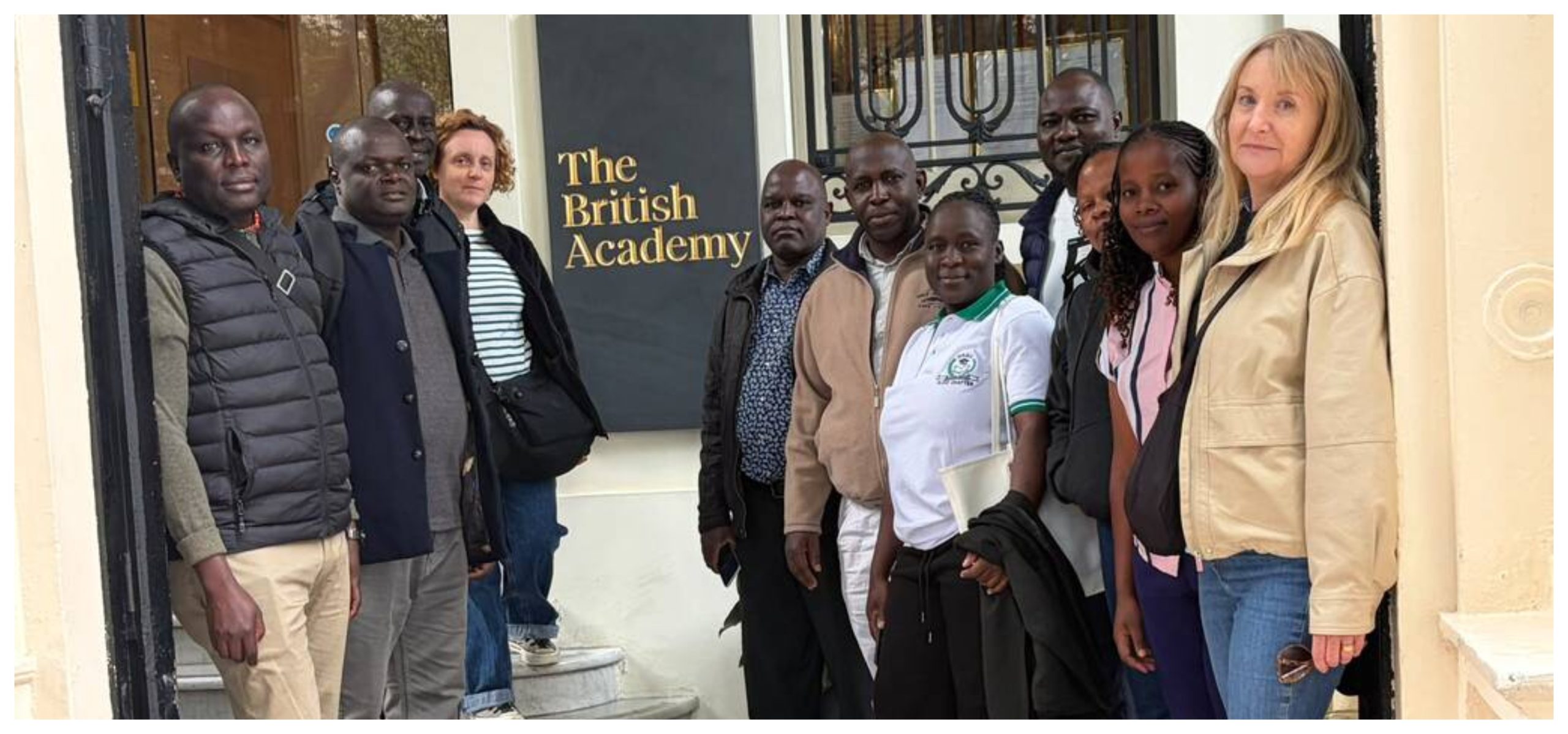
University of Eldoret researchers have partnered with leading UK and East African universities in a British Academy-funded project aimed at strengthening research management systems, improving grant acquisition, and enhancing innovation commercialisation across the region.
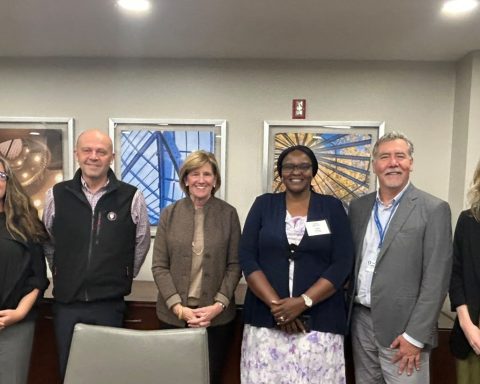
The University of Eldoret delegation participated in the second UK workshop of the Research Management Capacity Strengthening Project, held at the Royal Holloway, University of London (RHUL) from October 12 to 13 and at the University of Reading from October 14 to 15.
The initiative is supported through a £49,994 Overseas Development Assistance (ODA) Research Management Capacity Building Grant awarded by the British Academy. The project brings together Royal Holloway, University of London, the University of Eldoret, Kibabii University, and Uganda’s Makerere University.
The project is jointly led by Dr Hilary Lynch, Head of Strategic Grants at RHUL, Dr Becky Aloo, Head of the Intellectual Property Management Office at the University of Eldoret, Dr Manasi Echaune, Coordinator of Research and Innovation at Kibabii University, and Prof. John Baptist Tumuhairwe, Dean and Associate Professor at Makerere University’s College of Agricultural Sciences.
The University of Eldoret delegation comprised Dr Becky Aloo, Dr Jafred Muyaka, Christine Tomno, and Diana Bii.
According to Dr Aloo, the workshop marked a significant step towards equipping East African universities with practical research management tools that meet international standards while addressing local realities.
“Our goal is to adapt proven research management systems, tools and training materials so they can effectively support universities in East Africa. Strong research management structures are critical in attracting competitive grants, managing projects efficiently and translating research into societal impact,” said Dr Aloo.
Research Management Capacity Strengthening Project
The workshop focused on developing and adapting tools that will help universities strengthen their research support systems. Participants worked on creating a pre-award costing tool incorporating European Union costing models, building due diligence frameworks that meet international funders’ requirements, and adapting intellectual property and commercialisation resources.
During sessions at Royal Holloway, finance teams developed grant costing models while policy teams examined due diligence procedures used by UK institutions when assessing research partners before grant applications are submitted.
Participants also explored the innovation commercialisation process, from invention disclosure to licensing and spinout creation. They reviewed practical tools including pitch deck templates, invention disclosure forms, business model canvases, and commercialisation assessment frameworks.
The workshop later moved to the University of Reading, where discussions focused on research contract management, collaboration agreements, project set-up procedures, grant-writing strategies and methods for measuring and reporting research impact.
Speaking on the importance of the partnership, Dr Muyaka said the collaboration would help local universities compete more effectively for international research funding.
“Many African universities produce high-quality research, but they often face challenges in areas such as grant administration, compliance and commercialisation. The tools being developed through this project will help bridge those gaps and strengthen institutional capacity,” he said.
Outcomes of UK workshop of the Research Management Capacity Strengthening Project
Among the key outcomes achieved during the workshop was the development of a pre-award costing tool tailored for East African institutions to improve the accuracy of grant budgeting.
The partners also produced policy and due diligence resources, including templates and checklists designed to help universities meet the expectations of UK and international research funders.
Other outcomes included strengthened intellectual property and commercialisation tools, annotated research collaboration contract templates, and agreement on shared grant-writing and research impact training materials that can be used by universities across the region.
Project leaders said the resources developed through the partnership are expected to support universities in East Africa in securing more research funding, improving compliance with international standards, and increasing the societal and economic impact of research.

 Get factual and reliable news as fast as they happen