
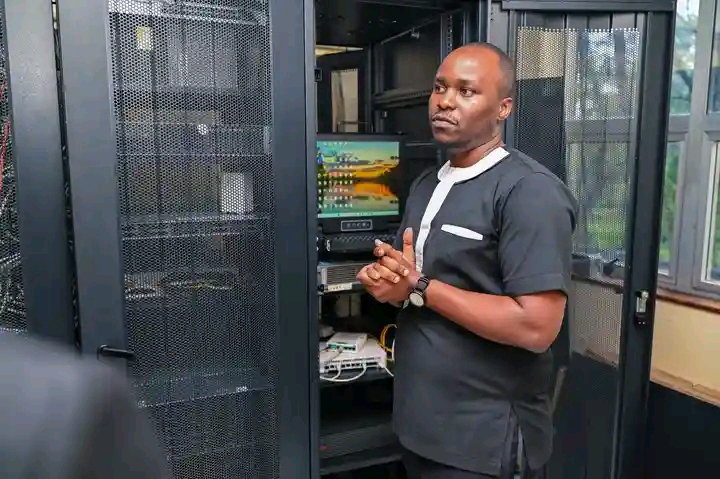
The Kenya National Public Health Institute (KNPHI) has formally received the Data Modernization Initiative (DMI) Infrastructure Server.
This is a landmark step in strengthening public health systems and enabling faster, evidence-driven decision-making across all levels of healthcare.
The handover took place at the National Public Health Laboratories Services (NPHLS) on Friday, September 5, 2025.
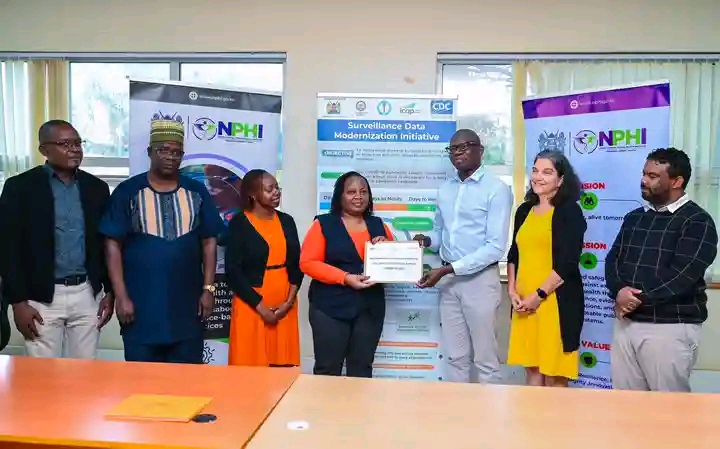
According to the Ministry of Health, the initiative seeks to transform how public health data is collected, managed, and shared.
It subsequently positions data as a powerful tool for surveillance, outbreak detection, and timely response.
It also supports efficient resource allocation while aligning directly with Kenya’s Universal Health Coverage (UHC) and the Global Health Security Agenda (GHSA).
How important is the Data Modernisation Initiative Infrastructure Server
Speaking on behalf of the Director-General for Health, Dr. Patrick Amoth, KNPHI Acting DG Dr. Kamene Kimenye noted that the DMI is a strong demonstration of collaboration between the Governments of Kenya and the United States.
“This transition is not just about advanced server infrastructure; it is about transforming how we generate, manage, and utilise data to safeguard the health of our nation,” she said.
US CDC Acting Country Director, Dr. Jennifer Galbraith, emphasized that robust digital infrastructure is vital for pandemic preparedness and public health resilience.
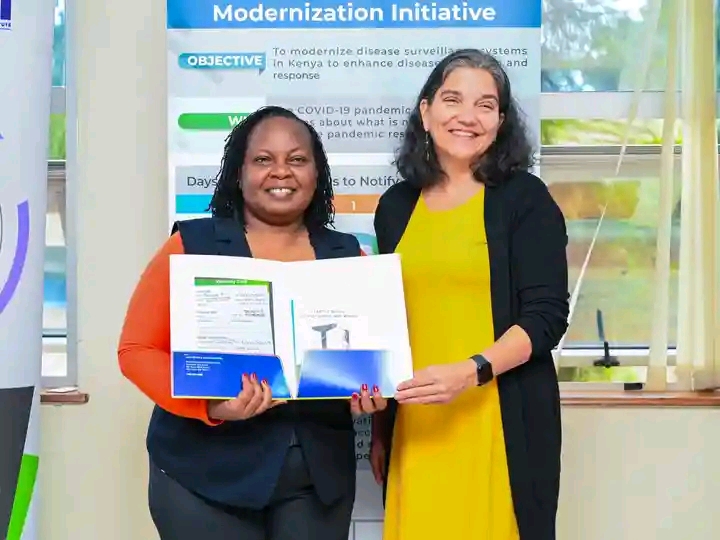
She noted that the DMI, funded by the US Rescue Plan Act, has invested in technology, sound policies, and workforce capacity to eliminate barriers that previously hindered effective data use.
Dr. Kamene further highlighted that the initiative addresses long-standing gaps in data systems, exposed during the COVID-19 pandemic.
She also said the DMI will modernize electronic case and lab reporting, public health registries, disease surveillance, and interoperability between immunization and health data systems.
The initiative has already influenced wider health programs, inspiring a culture of continuous improvement and attracting additional investments beyond its initial scope.