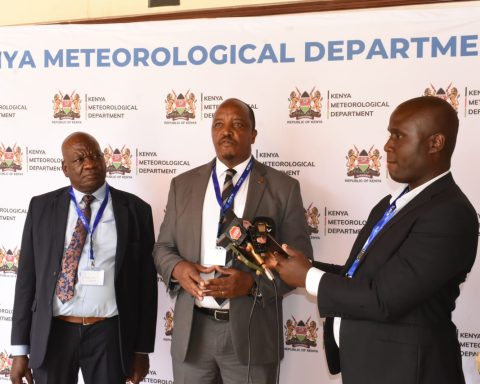

The Kenya Meteorological Department (KMD) has officially released the March–April–May (MAM) 2026 Long Rains Seasonal Climate Outlook.
This follows a national co-production process under the 12th National Climate Outlook Forum (NCOF-12) held in Nairobi.
The outlook indicates that several parts of the country are likely to experience near-average to below-average rainfall, with variability in onset, distribution, and intensity.
Which regions will experience near- to-above average rainfall?
The weather forecast shows that Lake Victoria Basin, highlands West of the Rift Valley, highlands East of the Rift Valley (including Nairobi), Rift Valley and North-western Kenya will receive near to above average rainfall during the long rain season.
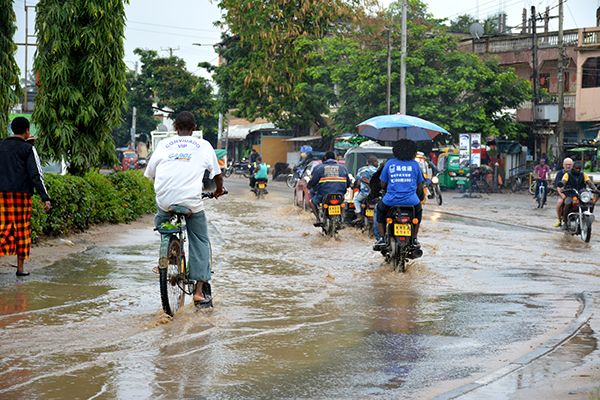
Some areas may, however, experience isolated heavy rainfall events, raising the risk of localised flooding and landslides.
Areas to receive near-average to below-average rainfall
- South-eastern Lowlands
- North-eastern Kenya
- Parts of the Northwest
“Rainfall may be poorly distributed, with intermittent dry spells that could affect agriculture, pasture, and water availability,” the weatherman said
The below-average rainfall is expected over the Coastal Region, including Mombasa, Kilifi, Kwale, Lamu counties, as well as the Coastal parts of Tana River (Delta).
When is peak for 2026 long rains season?
Despite generally lower rainfall totals, isolated heavy rainfall events may still occur, especially later in the season in the region.
“Peak rainfall at the Coast is expected in May, later than most other regions,” KMD said in a statement on Wednesday, February 4, 2026.

The long rain season is projected to be within normal to late in many areas, while distribution will be poor to fair across several regions.
Most regions will witness the peak season in April.
“The season is projected to have a generally poor to fair temporal and spatial distribution of rainfall across several areas, with intermittent dry spells, though isolated heavy rainfall events may occur,” said Edward M. Muriuki, the Director of Meteorological Services.
On the temperature outlook, the weatherman said warmer-than-average temperatures are expected across the entire country with increasing heat-related risks, especially in ASAL areas, coastal regions, and urban centres.
Following the release of the long rain season outlook, the weatherman advised the public and sectoral stakeholders to plan accordingly.
The outlook will help planning for several sectors, among them:
- Agriculture & Food Security
- Water Resources
- Health
- Energy
- Transport & Infrastructure
- Disaster Risk Management
- Urban & Community Planning
“This outlook supports anticipatory action, preparedness, and climate-informed decision-making,” the department said.