Residents of five counties benefiting from Kerio Valley Development Authority (KVDA) projects have strongly opposed a legislative proposal seeking to wind up six regional development authorities, including KVDA, and transfer their mandates to the National Treasury.
Praising the Authority for transforming the region since its inception, the residents warned that scrapping KVDA would deny these counties ongoing growth. They added that transferring the mandates to the National Treasury violates the spirit of constitutional devolution.
Should KVDA be scrapped?
Mark Meut, who heads the Wei Wei Irrigation project in West Pokot, noted that scrapping regional authorities would be unfair to the communities relying on their services.
“We are among the biggest beneficiaries of KVDA. There’s no way the mandates of these authorities overlap with the functions of county governments as argued by the proponents of this Bill. These RDAs are complementary,” he argued.
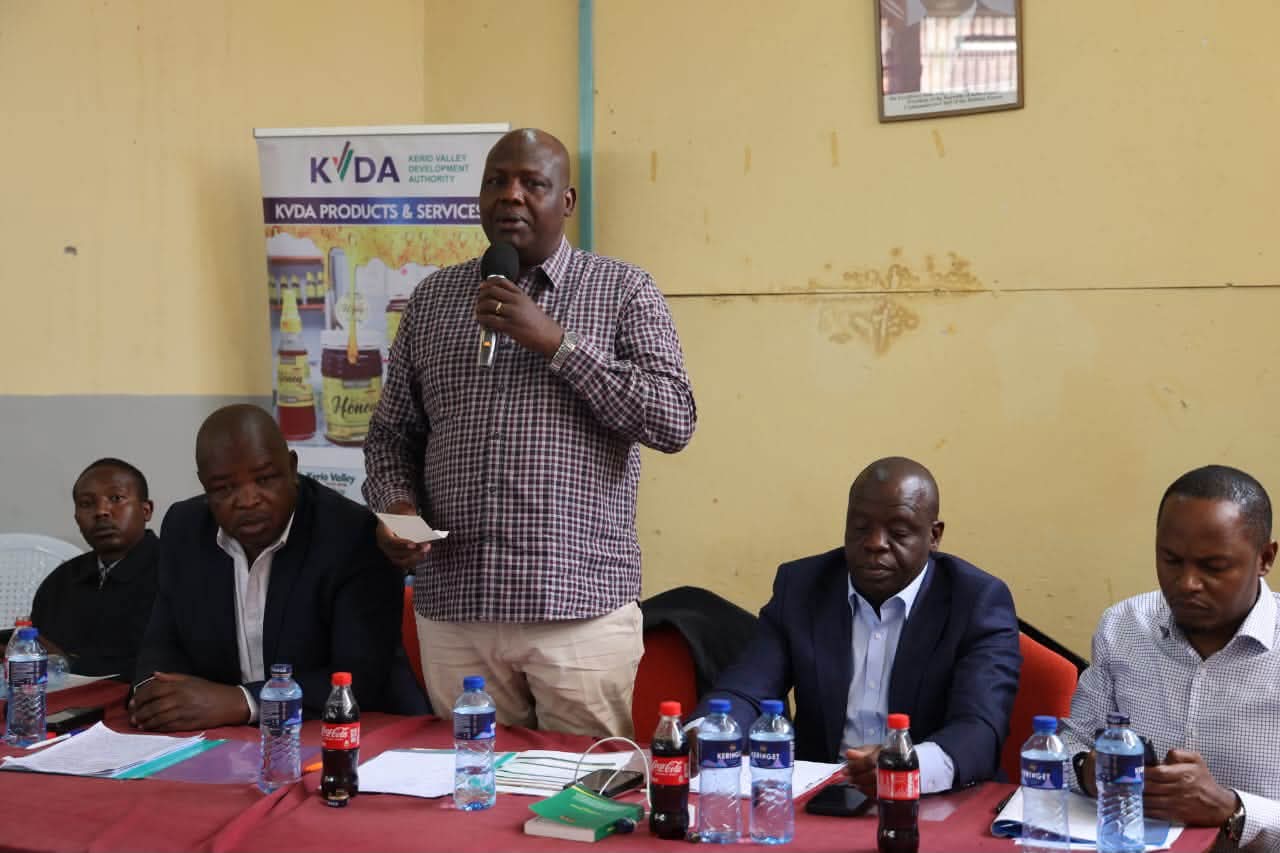
The residents shared their views during a public participation forum held in Iten, Elgeyo-Marakwet, regarding the Regional Development Authorities Laws (Repeal) Bill, 2026.
The forum brought together residents from Baringo, Samburu, Turkana, West Pokot, and Elgeyo-Marakwet counties—areas where KVDA operates completed or ongoing projects.
List of regional authorities the government want scrapped
The exercise, conducted by the Departmental Committee on Regional Development, marked the first phase of collecting public views across regions served by the six authorities.
These entities comprise the Coast Development Authority (CDA), Kerio Valley Development Authority (KVDA), Lake Basin Development Authority (LBDA), Tana and Athi Rivers Development Authority (TARDA), Ewaso Ng’iro South Development Authority, and Ewaso Ng’iro North Development Authority.
The proposed repeal aims to wind up the institutions on the grounds that they have fulfilled their original mandates, while aligning national development functions with the Fourth Schedule of the Constitution.
Furthermore, eliminating the authorities is intended to ease national budget pressures and boost efficiency, accountability, and service delivery through consolidation within existing institutions.
Are regional authorities a burden to the national government?
Responding to claims that the authorities have become a financial burden on the National Government, residents urged lawmakers to instead empower them to generate their own resources, highlighting their immense potential to uplift local communities.
Among the key benefits cited were enhanced peace and security among neighboring communities who no longer clash over scarce resources, alongside improved food security, women and youth empowerment, and overall living standards.
Joel, a resident of Baringo County, told the Committee that KVDA’s interventions helped improve local livestock breeding, boosting daily milk yields per cow from half a liter to 2–3 liters.
He urged the Committee to either shelve or postpone the proposed scrapping, pointing out that KVDA manages substantial ongoing projects.
“KVDA has made a mark here. Their projects are cost effective and over the years have always been completed on time. We cannot say the same of the national or county governments’ projects,” he stated.
Residents also expressed concern over provisions in the Bill, sponsored by Leader of the Majority Party Kimani Ichung’wah, which direct the Public Service Commission (PSC) to absorb staff from the six regional authorities. They argued that this plan is impractical.
They noted that only a fraction of KVDA employees serve on permanent and pensionable terms, meaning those on long-term or casual contracts along with thousands who earn an indirect living through the Authority, face a loss of livelihood.
Rather than dissolving the entities, residents called on lawmakers to draft legislation that aligns the establishing acts with constitutional provisions.
“Parliament is the supreme law making body. It can make any law to correct that which does not align with the Constitution,” argued Turkana County resident Lawrence Ekorapen.
“We want the Members to fight for the existence of KVDA with the same zeal as they have fought for the existence of National Government Constituency Development Fund (NGCDF) and the National Government Affirmative Action Fund (NGAAF),” he said.
Adding their voice to the debate, Committee Members led by Chairperson Peter Lochakapong assured the public that their input would shape the Committee’s final report to the House, emphasizing that the community’s message was clearly heard.
“We are just at the centre of a law making process. I want to assure you that the secretariat has captured all your views and they will be processed as they were shared,” he reassurred the attendees.
Etio Dam project
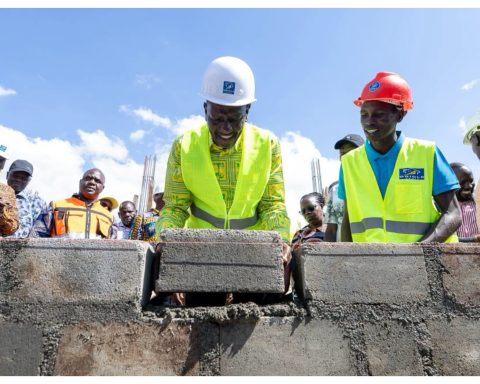
Later in the afternoon, the Committee inspected the ongoing construction of the Etio Dam project managed by KVDA. Commissioned by President William Ruto on July 26, 2025, at a cost of Ksh 80 million, the dam features a storage capacity of 160 million liters and provides irrigation for over 2,500 acres, directly benefiting more than 8,000 households.
The dam is undergoing expansion to increase its total capacity to 200,000 cubic meters, which will serve up to 30,000 residents from the highlands down to Biretwo.
The Committee conducted similar public sittings in Isiolo and Narok counties and is scheduled to roll out the second phase of public participation on the Bill in Mombasa, Kisumu, and Embu later this month.