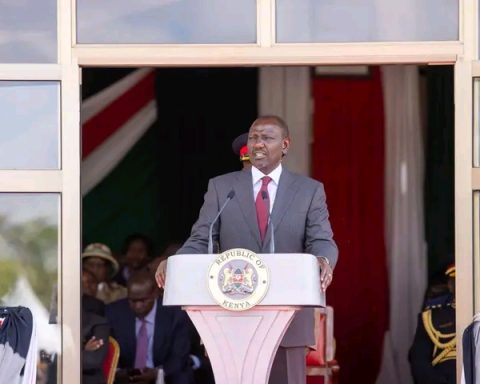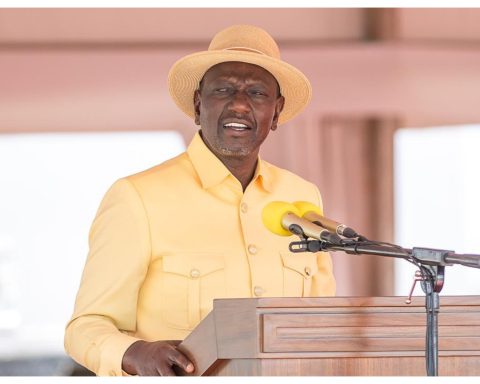


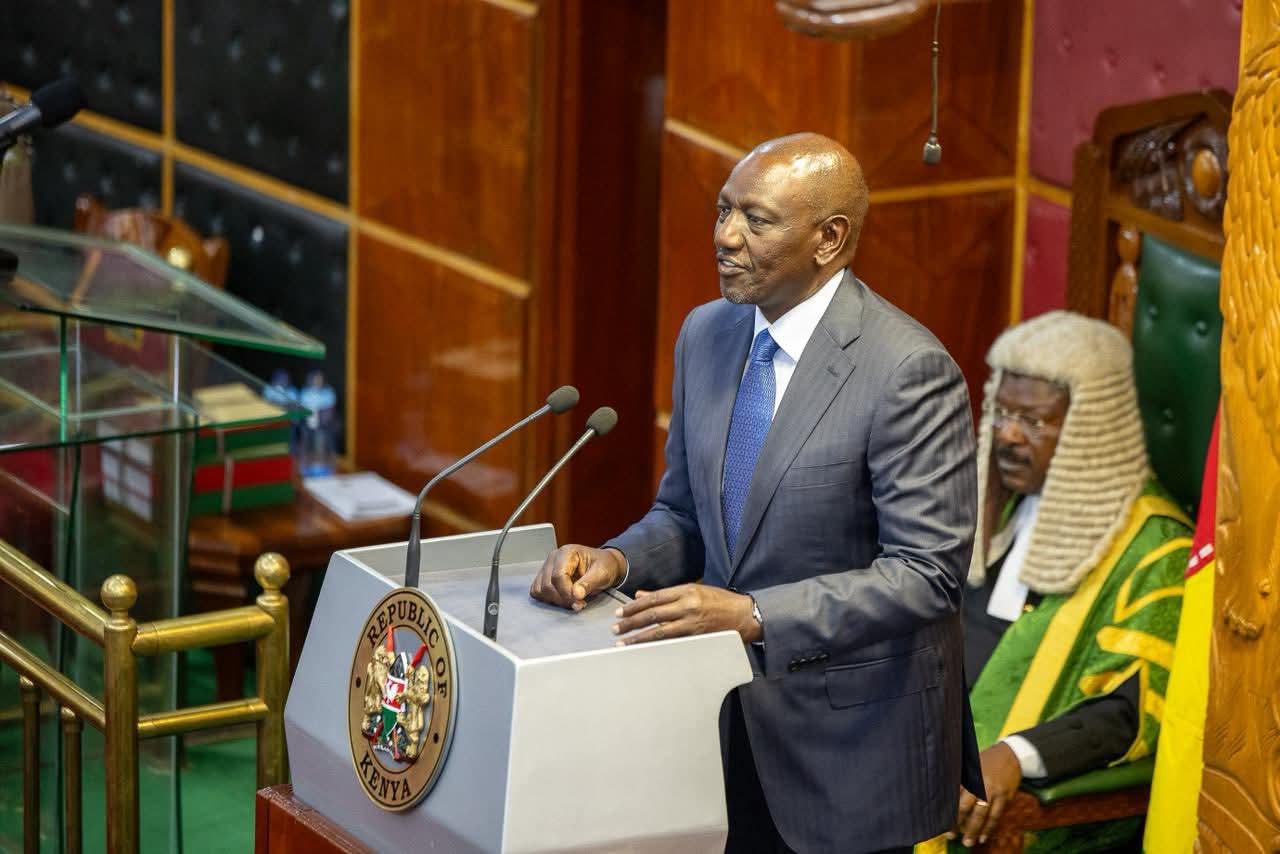
President William Ruto on Thursday, November 20, 2025, addressed a joint sitting of the National Assembly and the Senate, delivering his 2025 State of the Nation Address.
The President enumerated his administration’s achievements in the last three years as he submitted a roadmap to take Kenya to the next level.
What are Ruto’s four major national priorities?
He also pointed out that the government is committed to undertake, at a minimum, four major national priorities, to attain the much-needed prosperity. He cited Education, Transport and Logistics, energy and Irrigation as the government’s focus areas going into the future.
“First, we must invest relentlessly in our people; in their education, skills development, scientific training, and innovation capacity,” said President Ruto.
He said the government has already set the foundation through major reforms in the education sector.
“We have increased the education budget from KSh 490B in 2021 to over KSh 700B this year, which has facilitated better infrastructure in our education system, more teachers and trainers, and enhanced funding for our colleges and universities,” said the President.
President Ruto argued that his administration has reorganised government departments to establish a dedicated State Department for Science, Research, and Innovation.
He said the move will support the urgent need to scale up STEM courses in the country’s education system, strengthen innovation, promote research, and create a pool of high-level professionals in engineering and science.
The President maintained that the structure will also help actualise the two per cent research fund needed to make this ambition a reality.
“We must fund start-ups and deliberately scale up and commercialise innovation to create new companies,” he said.
How much is in Kenya’s national research fund?
The Head of State noted that there was a need to actualise the national research fund, moving from the current 0.8 per cent of GDP to 2 per cent.
He said the move leaves the country with a shortfall of about KSh 180 billion, saying there was a need to grow the fund to KSh 1 trillion over the next 10 years.
“We will mobilise domestic public resources, private investment, venture capital, and other private-sector financing to drive this effort, because no nation rises above the abilities of its citizens,” he said.

Second, the Head of State emphasised the need to turn around the economy from a net importer to a net exporter of products, goods and services, the most urgent being imports of agricultural food products that cost us Ksh 500 billion every year.
The President argued that the government has already made interventions to reduce imports of maize, sugar, edible oil, rice, and wheat, but our efforts are undermined by the natural limits of rain-fed agriculture.
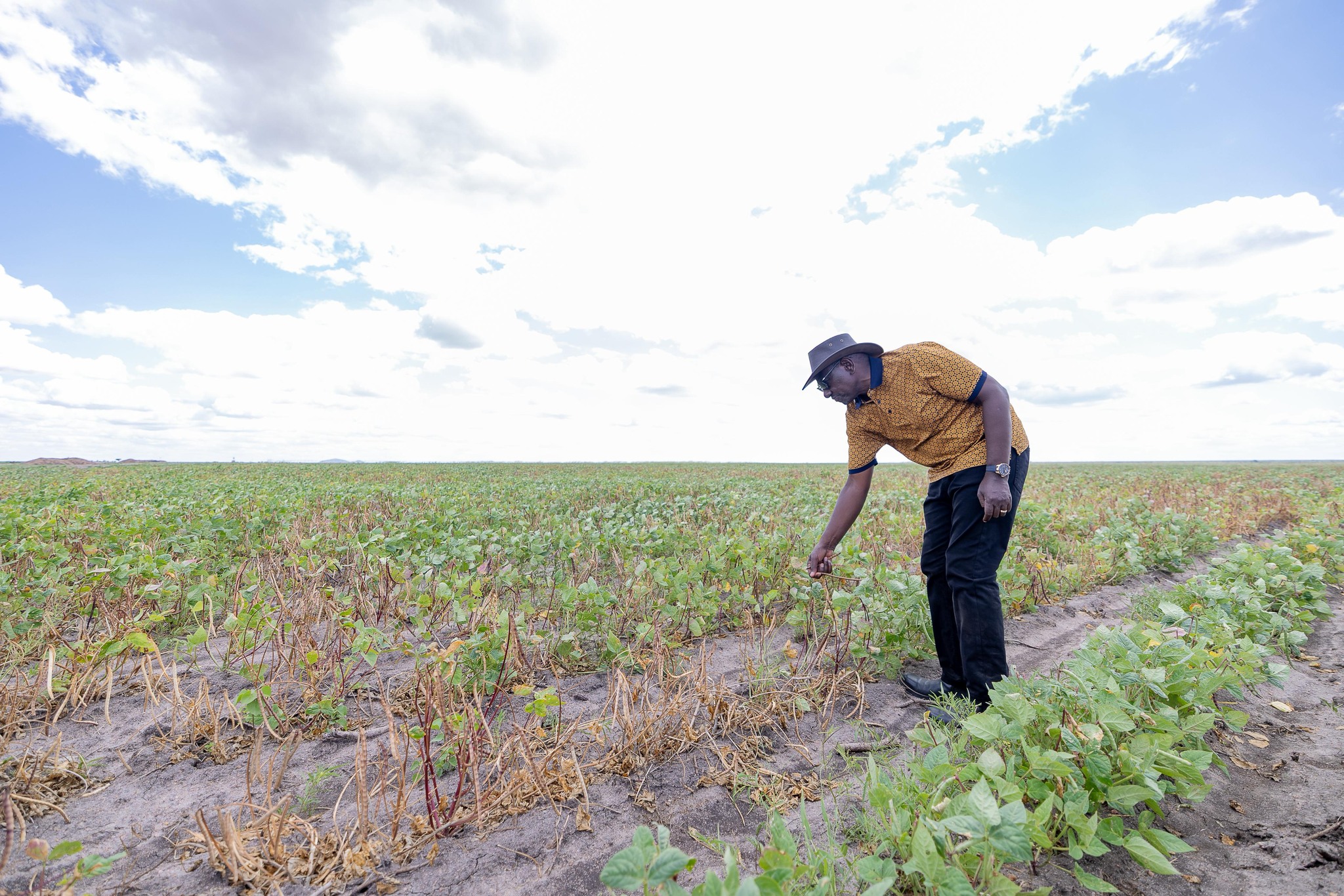
“We can no longer allow the clouds to determine whether our people eat or not. If we are to produce enough for domestic consumption and exports, expanded modern irrigation is now necessary and the only path forward,” he said.
What percentage of Kenya’s land supports rain-fed agriculture?
He pointed out that Kenya is endowed with fertile arable land, yet only 15 per cent of the country can support rain-fed agriculture, and this limited area is what we have relied on to feed the entire nation.
Given that 85 per cent of Kenya does not receive sufficient rainfall, Ruto said, there was a need to harvest and store rainwater to bring vast arable lands in these arid and semi-arid regions into productive use.
“With dams, we can transform our arid and semi-arid areas into hubs of agricultural production, even in the absence of rainfall,” he said.
He strongly recommended building at least 50 mega dams nationwide, alongside 200 additional medium and small dams and thousands of micro dams, to collect and store water, not only to secure the supply, but to bring at least 2.5 million acres under irrigation within the next five to seven years.
He said the Ministry of Water, Sanitation and Irrigation, alongside all relevant agencies, has already mapped the precise locations of these dams.
“These projects span the breadth of our Republic; from High Grand falls, a mega dam on river Daua in Mandera, Isiolo-Barsalinga dam, Yatta in Machakos, Sigly canal in Garissa, Soin Koru in Kisumu, Rumuruti in Laikipia, Thuci in Embu and Tharaka-Nithi, Lowaat in Turkana; Muhoya dam straddling Nyeri and Kirinyaga, Narosura in Narok and Arror in Elgeyo-Marakwet,” he said.
Others include Ndarugu in Kiambu, Kokwanyo in Homa Bay, Rare in Kilifi, Tongaren in Bungoma, and many more strategic sites nationwide.
Moreover, President Ruto pointed out that transport and logistics remain a national priority in the country’s prosperity agenda.
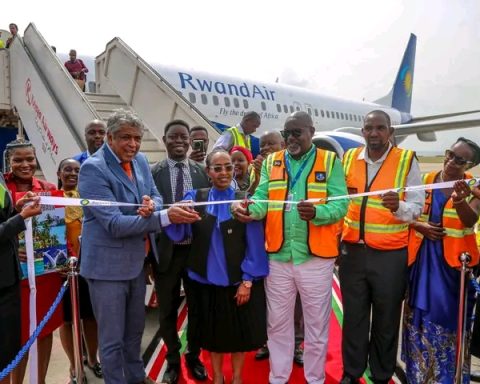
Noting that as the region’s economic and diplomatic hub, home to the UN’s largest office in the Global South, and the sixth-largest economy in Africa, President Ruto said Kenya must maintain world-class seaports, airports, highways, and digital corridors.
“Efficient transport and logistics are the backbone of our competitiveness. They accelerate national development, connect products to markets, move goods and services, lower the cost of doing business, and reinforce Kenya as the aviation and commercial capital of East and Central Africa,” said President Ruto.
How many kilometres of highways does Ruto plan to dual in 10 years?
To scale up the transport and logistics programme, the Head of State said the Ministry of Roads and Transport have already mapped out a comprehensive network of 2,500 highways for dualing and 28,000km of roads to be tarmacked in the next 10 years.
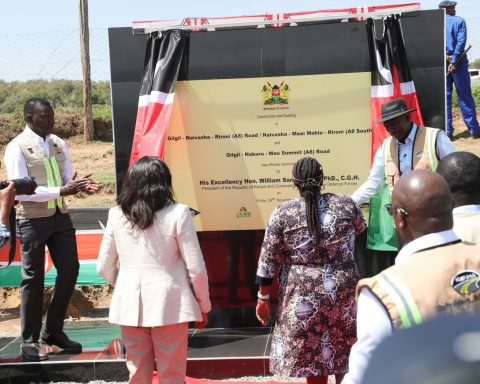
“This work is already progressing. Next week, I will launch the dualling of the 170-kilometre Rironi–Naivasha–Nakuru–Mau Summit road,” he said.
He added: “On the same day, we will break ground on the dualling of the 58-kilometre Rironi–Maai Mahiu–Naivasha road. The gridlock that paralyses these roads every day—especially on weekends and holidays—will soon be history.”
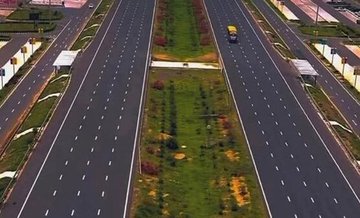
He said the infrastructure drive will also include extending the Standard Gauge Railway from Naivasha to Kisumu and eventually to Malaba beginning in January 2026.
How much does Kenya need to invest in implementing major projects?
In this regard, the President said estimates indicate that achieving these four priorities will require at least KSh 5 trillion, which can be achieved through the establishment of the National Infrastructure Fund and the Sovereign Wealth Fund.
“As noted earlier, our development ambitions require sustained, large-scale investment in education, including roads, energy, water systems, logistics, and digital networks. Yet our fiscal space is narrow,” he said.
The President stated that the government cannot continue to fund essential infrastructure through unsustainable borrowing or burden taxpayers with additional taxes.
“But neither can we afford to postpone these imperatives without risking our future,” he added.
He said there is a need to be innovative in the use of national revenues at our disposal, in the deployment of national assets available, and in creating public-private partnerships that will crowd in the enormous pool of private sector resources available, regionally and globally.
“This is why we will establish the National Infrastructure Fund, whose architecture will be underpinned by the reforms in the Government-Owned Enterprises Bill, passed by this August House, that I will be signing into law tomorrow,” said President Ruto.
He pointed out that the fund is the strategic solution that will provide a framework to innovatively scale up our resources to match the country’s ambition, saying it will fulfil the manifesto commitment to rebuild Kenya’s infrastructure while reducing reliance on debt.
Saying the model has done exceptionally well in other countries, the Head of State said the National Infrastructure Fund is therefore more than a financing tool.
“It is a generational strategy, preserving value, mobilising capital, accelerating delivery, and ensuring Kenya becomes stronger, wealthier, and more competitive,” said President Ruto.
He said a portion of all royalties from natural resources and a portion of the proceeds of the privatisation of national assets will be invested in the fund.