

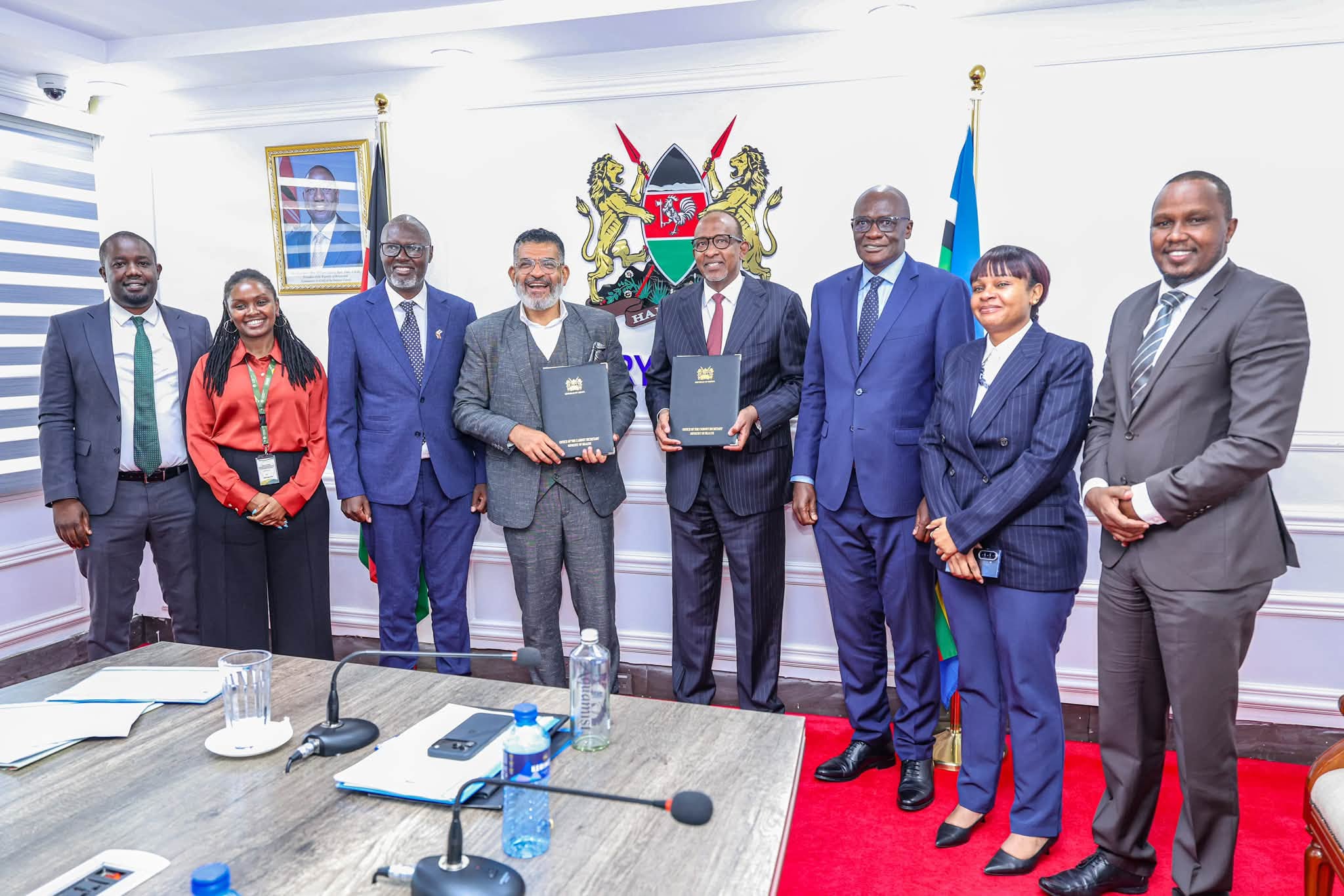
Cabinet Secretary for Health Aden Duale and the Council of Governors (CoG) Health Committee have agreed that the current Social Health Authority (SHA) facility contracts, which were extended to October 14, 2026, will not be prolonged further.
The decision was reached during a high-level meeting held on October 5 between the Ministry of Health, the CoG Health Committee led by Mombasa Governor Abdulswamad Nassir, SHA, the Digital Health Agency (DHA), health sector regulators and other stakeholders. The meeting reviewed progress in implementing the SHA 2026-2029 contracting cycle under the HAKIKA framework and addressed emerging challenges affecting healthcare delivery.
Both the National and County Governments reaffirmed their commitment to ensuring all eligible public health facilities complete the contracting process on time to guarantee uninterrupted access to healthcare services for SHA beneficiaries. To fast-track the exercise, SHA will establish HAKIKA contracting clinics in all counties up to October 14 and provide weekly progress reports to the CoG.

To strengthen implementation, SHA, the CoG and County Health Departments will form a Joint Technical Committee tasked with overseeing the rollout, coordinating activities and resolving technical and operational challenges that may arise during the transition.
The stakeholders further agreed that every county health facility will retain its own contract with SHA, with payments continuing to be channelled directly into Facility Improvement Financing accounts. In a move aimed at reducing delays, SHA will also accept relevant documents already held at county level as part of the contracting requirements.
Counties Given Final Window to Meet SHA Compliance Requirements
Although facilities must meet all statutory obligations, those that have fulfilled other contracting conditions will be granted a 30-day window to submit outstanding compliance documents, including approvals from the National Social Security Fund (NSSF), National Environment Management Authority (NEMA), fire safety authorities, the National Council for Persons with Disabilities (NCPWD) and the Office of the Data Protection Commissioner (ODPC).
During the meeting, participants also underscored the importance of regulatory compliance, quality healthcare and patient safety. Health facilities will only be contracted for services they are licensed to provide, with valid approvals from agencies such as the Kenya Medical Laboratory Technicians and Technologists Board (KMLTTB), the Pharmacy and Poisons Board (PPB) and the Kenya Nuclear Regulatory Authority (KENRA). Level 4 and Level 5 facilities have been given three months to comply with mandatory laboratory licensing requirements.
On claims management, the stakeholders agreed that all clean claims will be settled within 90 days of receipt and processed on a first-in, first-out basis. Where available funds are insufficient, pending clean claims will be recognised as certified liabilities and carried forward for payment within the same financial year, subject to budget allocations.
The meeting also addressed digital health integration, data protection, the security of county health information systems and the rollout of the PPB track-and-trace platform.

SHA Commits to Faster Claims Payments and Digital Health Rollout
As part of the digital transition agenda, the CoG committed to supporting Level 5 hospitals to migrate to the Health Management Information System (HMIS) by October 30, 2026.
Further consultations are expected to continue, with SHA scheduled to meet County Executive Committee Members for Health on October 6 to enhance coordination and accelerate HAKIKA implementation across the counties.
The engagement concluded with the signing of a Joint Communiqué on the contracting of county public health facilities under the SHA 2026-2029 contracting cycle. The agreement underscores the stakeholders’ commitment to accountability, improved healthcare service delivery and ensuring eligible county health facilities continue serving SHA beneficiaries.