

Kenyans have been asked not to be scared of the Genetically Modified Organisms (GMOs) that the cabinet recently approved to be cultivated and imported into the country.
State Department of Vocational and Technical Training (VTT) Principal Secretary Dr Margaret Mwakima says there is no cause for alarm since all the GMOs are first approved by the World Health Organization (WHO) before they are allowed in any country.
Speaking recently during The Eldoret National Polytechnic Science and Research Conference, Dr Mwakima said GMOs are safe.
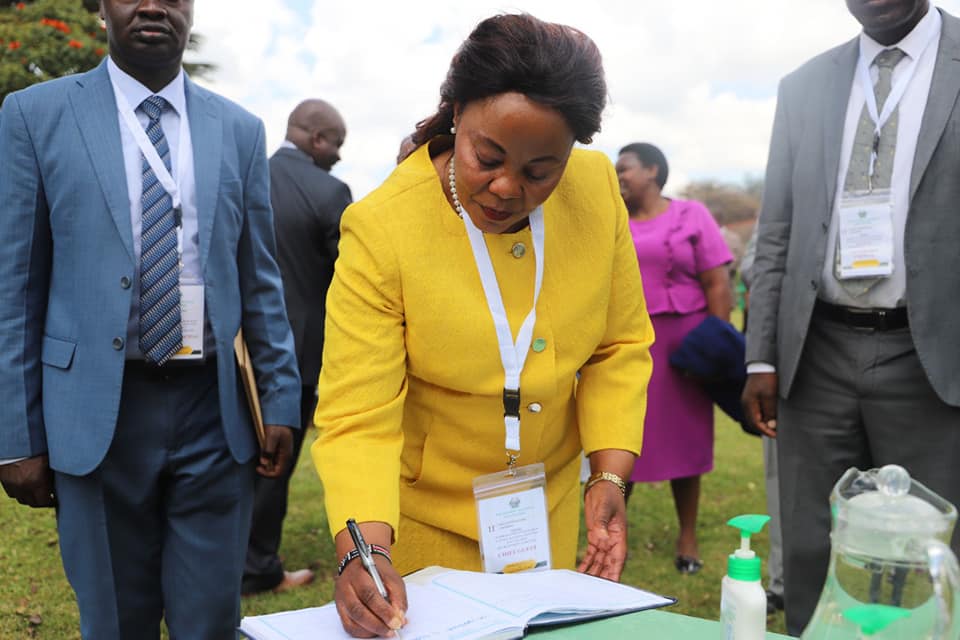
“People should not be scared by GMOs. Before they get to the market they are certified by WHO. They are very safe,” said the PS.
Last week, the cabinet chaired by President William Ruto lifted a 10-year ban on GMOs that paves way for the cultivation of GMOs locally and also allows for the importation of GMO crops.
Meanwhile, Dr Mwakima says the move is welcomed based on the current challenges posed by climate change that has led to water scarcity and infertility in soils.
Adaptation and resilience
“Within the youth unemployment and bulging population, there can never be a better time to come here with innovative ways and provide adaptation and resilience,” said the PS.
“The drought situation is here with us. Most parts are becoming drier and soils are depleted. The solution to ensure we’re able to get to resilience and adaptability is what the President with cabinet approved as far as the genetically modified organisms and technology is concerned,” she added.

Dr. Mwakima holds PhD, a Master’s Degree in Environmental Science with a major in Sustainable Natural Resources Management and a Bachelor of Education (Science) Degree in Botany and Zoology.
Further, she points out that GMOs should be able to provide solutions that enable farmers to plant crop varieties that can grow in drier areas as well as wetter areas – and be able to produce more within limited soil nutrients and space.
“TVET sub-sector has led the way. There is a lot of research that has been ongoing in the improvement of crop and livestock varieties and such a policy direction is welcome,” noted the PS.