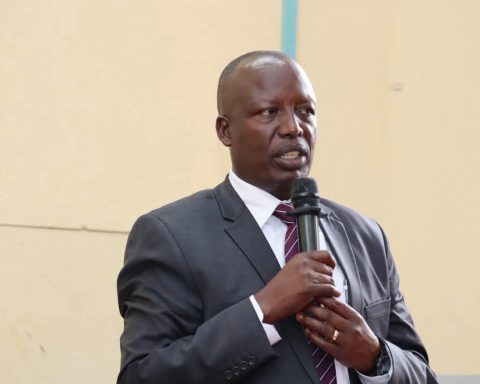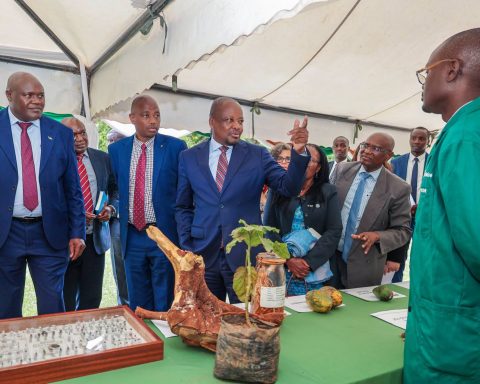

Elgeyo Marakwet Governor Wisley Rotich now says Kerio Valley holds immense potential in agricultural production.
Rotich has described the area, long associated with insecurity due to banditry, as the county’s ‘Canaan’.
It is for this reason that the County Government has sustained support to farmers in the area through input provision.
Which crops do well in the Kerio Valley belt?
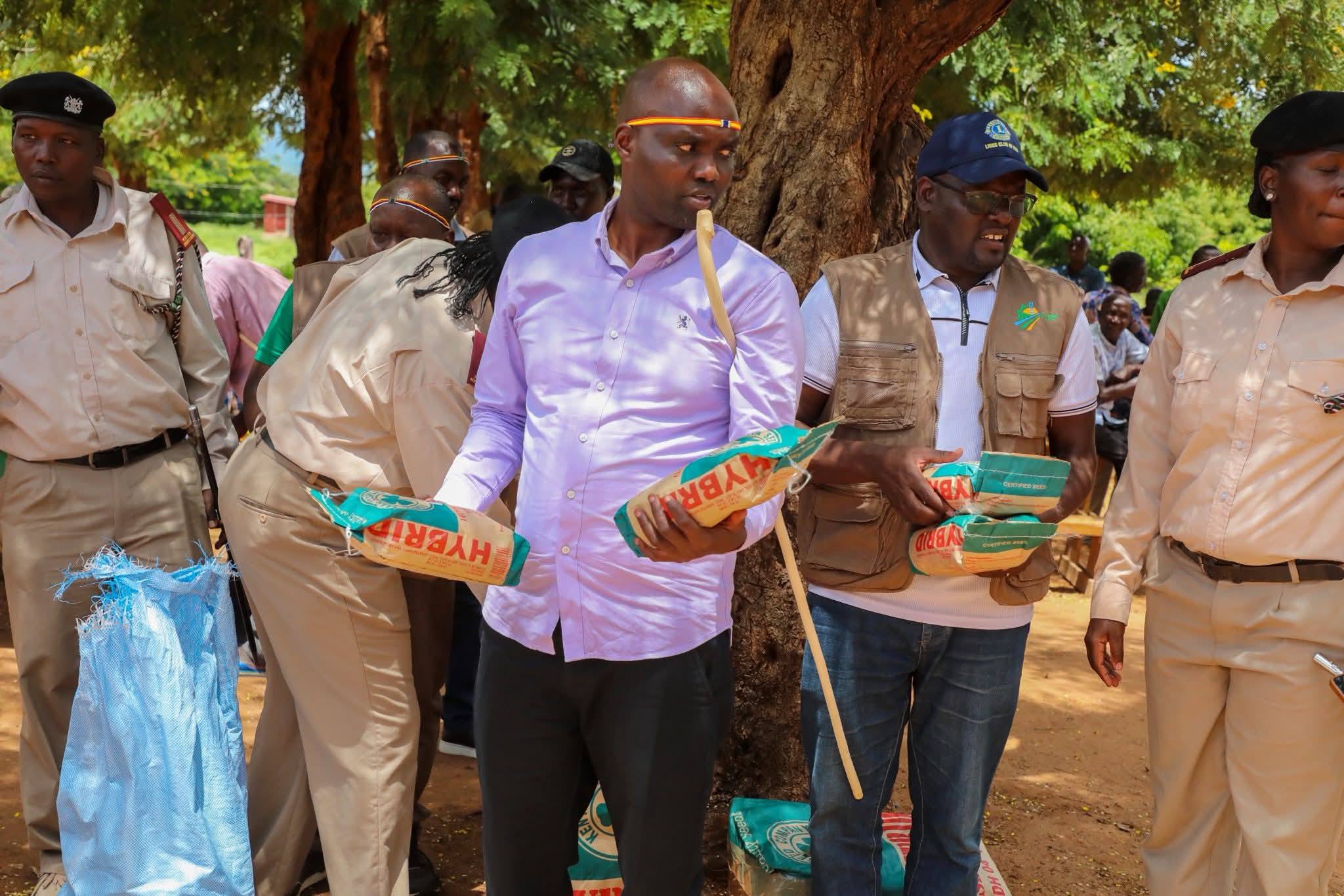
On Monday, April 13, 2026, the governor led a team from the Department of Agriculture in distributing sorghum seeds, drought-tolerant Nyota bean seeds and fast-maturing dryland DH04 maize seeds to farmers across the Kerio Valley belt.

They were drawn from Endo, Arror, Lower Sambirir, Lower Emsoo and Lower Tambach.
The County boss said his administration plans to put about 1,400 acres under crops, noting that 6.5 tonnes of Nyota beans is enough to plant 324 acres, while 4.32 tonnes can plant 430 acres, and 2.5 tonnes of sorghum seeds can plant 630 acres.
“Through our Pesa Mfukoni program, the sale of the harvest is expected to significantly boost household income,” said the Governor.
Meanwhile, farmers in Soy South and Soy North wards received maize and bean seeds in preparation for this year’s planting season.

This is part of the ongoing County Government support for farmers in the Kerio Valley belt to harness the region’s agricultural potential.
How long does Nyota bean take to mature?
The Nyota bean variety is a high-yielding, drought-tolerant, and fast-maturing biofortified bean variety that matures between 60 and 70 days.
It has a potential yield of about 10 bags per acre. These characteristics are also exhibited by the dryland DH04 maize seeds, which are also tolerant.
Governor Rotich, who led the distribution exercise in Chepsirei and Emsea, said the support will lead to enhanced food security and increased household earnings.
“I urge all beneficiaries to ensure that they plant the seeds and seek advice from our respective Ward Agricultural Officers for the best farm practices in order to achieve an optimum harvest,” he said.