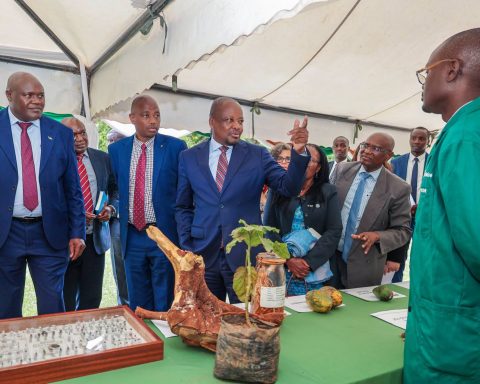


Maize farmers who have harvested their produce in the North Rift counties will have to wait for a little bit longer before the government opens the National Cereals and Produce Board (NCPB) stores for them to deliver their produce.
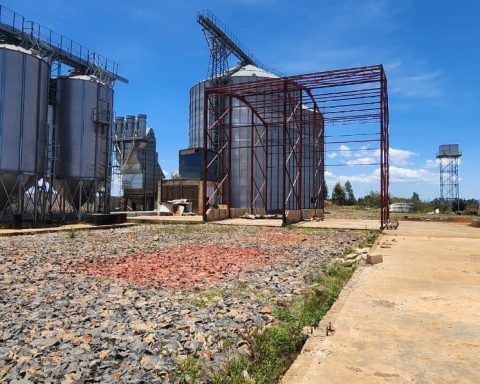
Crops Development Principal Secretary Dr. Paul Rono says they are currently renovating NCPB stores before they can start receiving farmers’ maize.
“We shall start receiving maize in our NCPB depots in the next month because we are waiting for 100 dryers to be shipped into the country,” Rono said.
He further revealed that the government through the Ministry of Agriculture has settled to buy a 90-kilogram bag of maize at Ksh4,000 after careful consideration of the cost of production.
“As you are all aware, we subsidised fertilizer and after considering several factors we settled to buy one million bags of maize for our Strategic Food Reserve at 4,000 shillings per bag,” he added.
Rono, who is barely two weeks old in the Ministry of Agriculture following a recent reshuffle also urged farmers to embrace technology in the sector.
“We are passionately advocating for agricultural mechanization. This is because it will reduce the cost of production,” he added.
Agricultural financing
His Micro, Small and Medium Enterprises (MSMEs) Principal Secretary Susan Mang’eni said the government will provide agricultural financing to Kenyan farmers.
“Apart from financing and market linkages, we shall also train our farmers on best agricultural practices so that our farmers can properly utilize the 47 County Agricultural and Industrial Parks,” Mang’eni said.
Trans Nzoia County Governor George Natembeya on his part called on the government to hasten delivery of dryers to counties to reduce post-harvest losses.

“We lose over 30% of our produce due to the problem of post-harvest management and we seriously need to address this if we want to achieve food security,” Natembeya said.
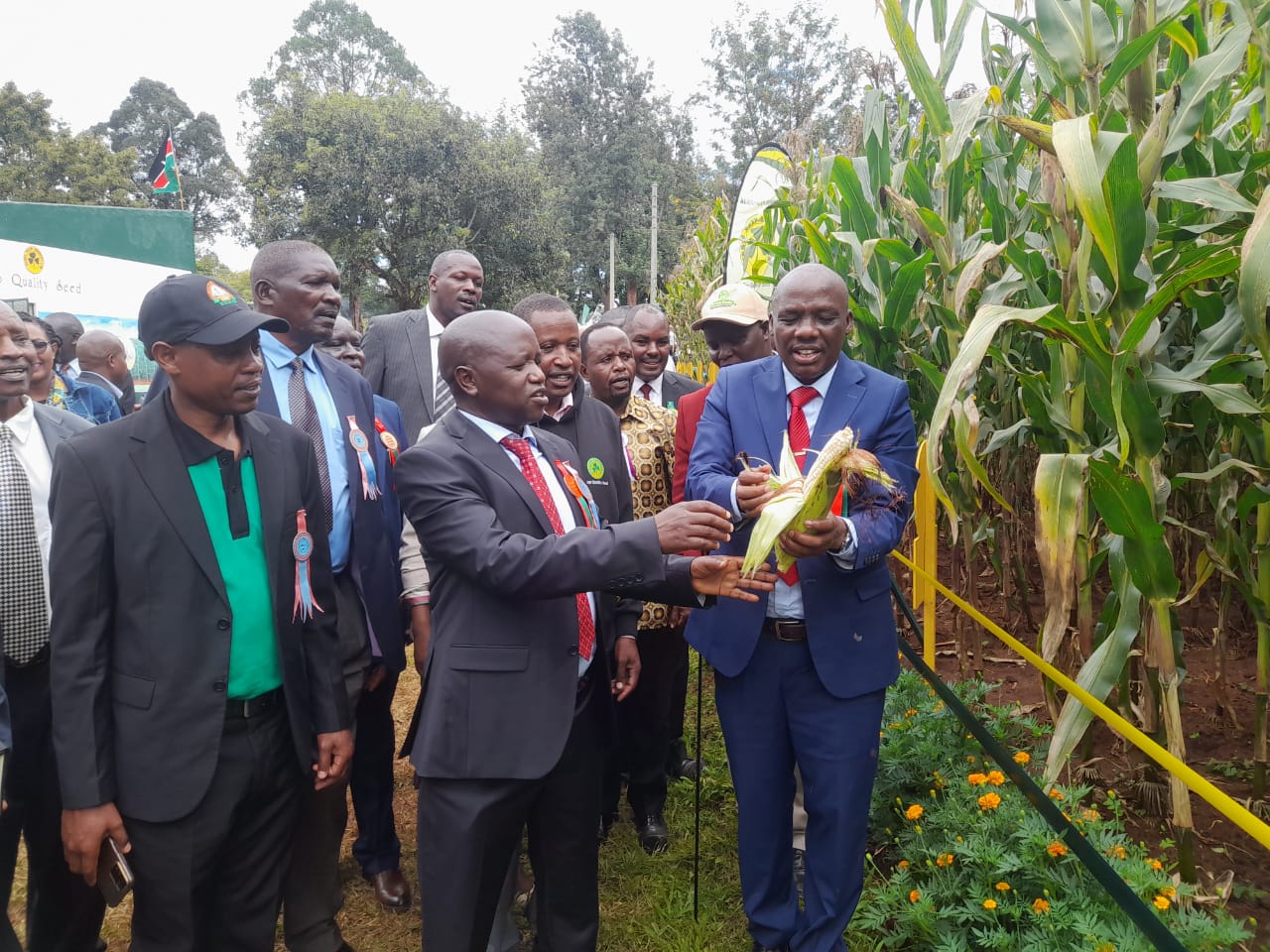
Meanwhile, Kenya Seed Company acting Managing Director Sammy Chepsiror has assured farmers that the company has sufficient seeds for the next season.
“As a company, we have enough seeds for various ecological zones. Our seeds are drought and pest-resistant and therefore farmers should not worry because we keep on improving our seed varieties,” Chepsiror said.