
President William Ruto has called for a national conversation among Kenyans and groups that will help craft a long-term national development plan that will succeed Vision 2030.
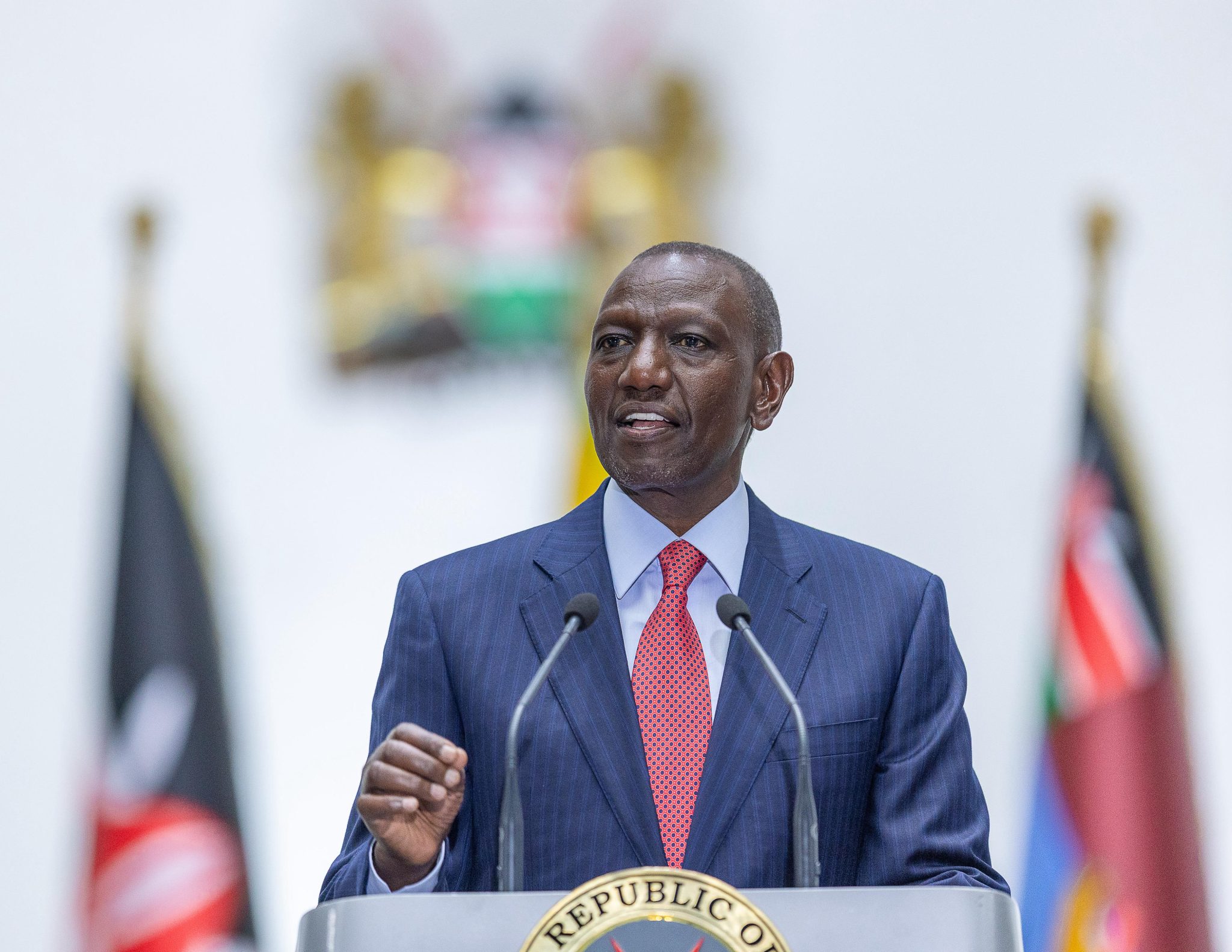
In a special address from State House, Nairobi, on Thursday evening, the President noted that as Vision 2030 comes to a close, Kenya has reached a defining moment that requires a fresh, people-driven development charter anchored in the Constitution’s aspirations.
“This conversation belongs to each one of us, and to all of us,” he declared, describing the exercise as one that must rise above politics, transcend electoral cycles and unite the country around a shared national destiny.
The proposed vision, he pointed out, will seek to answer a fundamental question: What kind of Kenya should future generations inherit?
In the thought-provoking address, President Ruto reflected on Kenya’s economic journey alongside countries that have dramatically transformed over the past six decades. He noted that while South Korea, China, Vietnam and Bangladesh embraced successive waves of industrialisation and economic reform, Kenya failed to capitalise on similar opportunities.
How Kenya has lagged compared to South Korea, China
The President gave various comparisons to demonstrate how far Kenya has lagged. In 1965, he stated, the country and South Korea had almost similar GDP per capita levels of about $110. Today, South Korea’s income per capita exceeds $36,000 compared to Kenya’s $2,400.
China, whose GDP per capita was lower than Kenya’s in the 1980s, now stands at more than $14,000, while Vietnam has more than doubled Kenya’s income per capita after embarking on comprehensive market reforms in the early 1990s.
At the same time, he explained, Ghana and Zimbabwe, which he noted compare well with Kenyan realities, have also overtaken our country on GDP per capita.
The President challenged Kenyans to confront what he described as an uncomfortable but necessary question: Why have other nations fulfilled so much of their potential while Kenya has repeatedly fallen short?
Why it’s the right time for Kenya to chart a new national direction
He highlighted four major developments that make this the opportune moment to chart a new national direction. First, he said, the country has restored macroeconomic stability following years of global economic shocks.
He cited lower inflation, a stable currency, foreign exchange reserves exceeding $15 billion, declining borrowing costs and record foreign direct investment of $3.2 billion in 2025 as evidence that Kenya has rebuilt confidence in the economy.
Second, he stated that Vision 2030 is approaching its sunset days. While praising the blueprint for transforming national planning and attracting investment, the President acknowledged that some of its ambitions, including attaining upper middle-income status by 2030, remain unmet.
Instead of viewing this as failure, he described it as an opportunity to honestly assess what worked in Vision 2030, learn from the shortcomings and design a stronger roadmap for the decades ahead.
Third, President Ruto explained that the next era of global economic transformation will belong to Africa because the continent has the world’s youngest population, abundant renewable energy resources, strategic minerals and expanding consumer markets.
The President pointed out that Africa is increasingly attracting investors and manufacturers seeking the next frontier of global growth. For Kenya, he said, this represents a once-in-a-generation opportunity not only to participate in Africa’s rise, but also to lead it.
What does the Kenyan Constitution demand?
Finally, the President stated that the Kenyan Constitution demands more than democratic governance. It requires the State to deliver economic transformation, prosperity and improved quality of life for every citizen.
One of the central themes of his address was that the Constitution has provided a practical blueprint for national development. He explained that constitutional guarantees, including the highest attainable standard of healthcare, housing, education and food security, should no longer remain broad aspirations but should be translated into measurable development outcomes.
“The purpose of State power is not simply to administer the affairs of the State,” he said. “It is to expand opportunity, promote human dignity, create wealth and improve the lives of citizens.”
Kenya, the President asserted, now needs a national development charter that clearly defines what prosperity, equality, social justice and sustainable development should mean in practical terms for every citizen.
He also pointed to the recently established National Infrastructure Fund and the Sovereign Wealth Fund as foundations for long-term national transformation. These institutions, he noted, are intended to finance strategic investments, preserve wealth for future generations and ensure development planning extends beyond individual political administrations.
Great nations, the President said in his address, are built through strong institutions, disciplined execution and long-term planning rather than short-term political cycles.
When will Kenya launch nationwide public consultations?
He announced that Kenya will formally launch nationwide public consultations on August 12, 2026, bringing together political leaders, professionals, faith groups, academia, civil society, workers, innovators, businesses and young people.
He said the process will be inclusive, transparent and citizen-led because a national vision cannot be written by Government alone.
The consultations, President Ruto noted, will build on proposals already prepared by a team led by Professors Hiroyuki Hino and Anyang’ Nyong’o, whose recommendations envision Kenya becoming an industrialised, globally competitive and prosperous high-income nation in one generation.
The President described the national consultations as the defining responsibility of the current generation.
He reminded Kenyans that the generation that preceded current leaders gave Kenya a transformative Constitution, adding that it is incumbent upon the present generation to build a nation worthy of that vital document.
He ended his address with an appeal to Kenyans: “We have secured the foundations of our democracy. Let us now secure the foundations of our prosperity.”