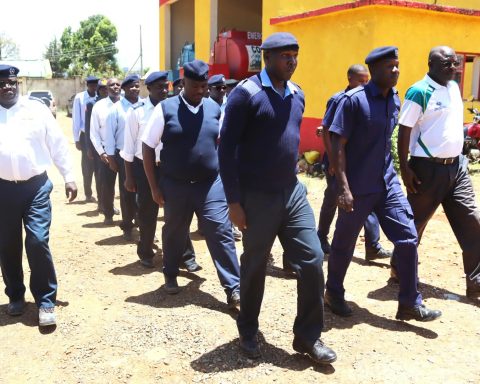


The transformation of informal settlements in Eldoret is gaining momentum, with the ongoing tarmacking of the 4-kilometre Maili Nne Road proving to be a watershed moment for thousands of residents.
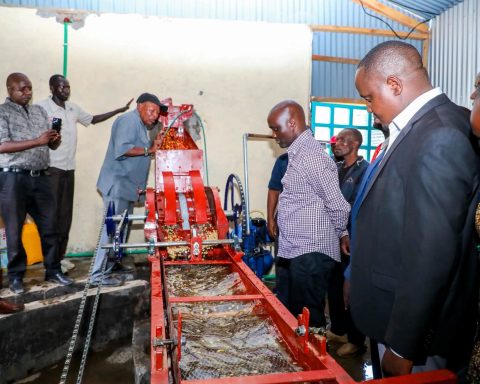
Uasin Gishu Governor Dr. Jonathan Bii Chelilim visited the site on Monday, August 24, 2025, to assess the progress of the project, which is being carried out under the Second Kenya Informal Settlements Improvement Project (KISIP2). This initiative is funded by the World Bank in collaboration with both the National and County Governments.
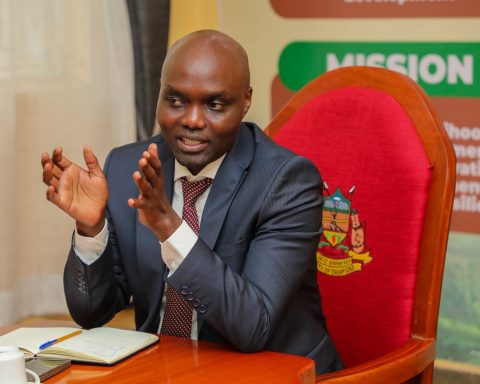
Governor Bii emphasised that the road will not only facilitate transportation but also create new opportunities for businesses and residents alike.

“This road is more than just tarmac and drainage—it represents a new chapter of social and economic revitalisation for Maili Nne. It means mothers can reach hospitals faster, traders can transport their goods efficiently, children can attend school safely, and investors will be more inclined to establish businesses in this area,” stated Dr. Bii.
How KISIP is transforming Maili Nne estate
For years, Maili Nne struggled with impassable muddy roads, flooding, and safety concerns after dark. Now, with the installation of modern drainage systems, walkways, floodlights, and street lighting accompanying the new tarmac, the area is undergoing a visible and exciting transformation.
Businesses that once closed early due to insecurity are now thriving. Shops, food kiosks, and small eateries are enjoying significant increases in clientele, while boda boda operators report a surge in customers due to the improved road conditions.
“Before, carrying a passenger here during the rainy season was nearly impossible. Now the road is smooth, and we can work late into the evening because of the streetlights. Our income has increased,” said Peter Mwangi, a boda boda rider.

Traders at the Maili Nne market are also experiencing a renaissance in activity. Mary Jepchumba, a vegetable seller, noted her daily sales have doubled since construction began.
“Customers no longer avoid this place because of mud and stagnant water. The market is alive again, and I can even think of expanding my business,” Jepchumba said.
Wider economic impact of improved roads in Maili Nne
The road is anticipated to elevate land values in Maili Nne and surrounding areas, attract small-scale industries, and stimulate housing development. Improved connectivity allows residents to access the Eldoret town centre more easily, reducing travel costs and enhancing productivity.
County Executive Committee Member for Lands, Physical Planning, Housing and Urban Development, Edward Sawe, noted that the projects align with Governor Bii’s Nguzo Kumi development agenda.
“By investing in settlements like Maili Nne, we are enhancing dignity, safety, and economic opportunity for all residents. This is the urban growth model we aim to replicate across Uasin Gishu,” stated Mr. Sawe.

In addition, Chief Officer for Housing and Urban Development, Ms. Mary Kerich, emphasised that infrastructure is foundational for inclusive growth.
“When we improve roads, drainage, and lighting in informal settlements, we are not just upgrading infrastructure—we are unlocking economic potential. Property owners are investing in better housing, new businesses are emerging, and young people are finding jobs in construction and services. This approach bridges the gap between marginalised settlements and the modern city,” Ms. Kerich affirmed.
Which Eldoret estates are benefiting from KISIP2 projects?
The Maili Nne Road upgrade is one of several infrastructure improvements underway across Eldoret’s informal settlements under KISIP2, which includes Segero, KK, Kasarani, Shauri, Kipkaren, Mwanzo, and Huruma. The program not only focuses on rehabilitating infrastructure but also fosters community involvement in planning and oversight, ensuring that developments reflect local priorities.
As the completion of the 4-kilometre road nears, residents are filled with hope for the future. The informal neighbourhood is rapidly evolving into a vibrant, connected community—demonstrating that strategic investments can profoundly change lives.

For Maili Nne, the tarmacked road is not merely a passageway; it is a pathway to social mobility, economic growth, and a brighter future.